Where Auckland Is Building New Homes — H1 2026 Data
Last updated:
What 889 Consent Applications Tell Us
Quick answer: Howick leads Auckland for new home consent applications in the first half of 2026, with 131 of the 889 new-dwelling resource consent applications lodged with Auckland Council between 21 December 2025 and 20 June 2026.
We went through every resource consent application on Auckland Council’s public register for the six months to 20 June 2026 — all 5,339 of them. 889 mention a new dwelling. That’s roughly one in six applications across the entire region, and they’re not spread evenly.
A handful of local boards (the 21 areas Auckland Council divides the region into for local decision-making) account for most of the activity. The top seven boards hold around 60% of all new-dwelling applications. And the monthly numbers tell their own story — lodgements more than doubled between January and May.
Nobody else has published this breakdown. Stats NZ tracks building consents once construction is approved. This data sits one step earlier in the pipeline: the point where someone commits real money to planning a new home or development. It’s the closest thing Auckland has to a forward indicator of where homes are about to be built.
The full ranked table, the monthly trend, and the methodology are all below. Journalists and researchers: everything here is reproducible from the public register, and you’re welcome to use the tables and chart with a link back to this page.
Where Auckland is planning new homes — H1 2026
Resource consent applications mentioning a new dwelling, by local board (21 Dec 2025 – 20 Jun 2026). Top 7 of 21 boards shown = 59.7% of Auckland’s 889 total.
Source: Auckland Council resource consent register. Lodgements, not approvals; one application may cover multiple dwellings.
The Headline Numbers: 889 New-Dwelling Applications in Six Months
Between 21 December 2025 and 20 June 2026, Aucklanders lodged 5,339 resource consent applications with Auckland Council — and 889 of them mention a new dwelling. A resource consent, if you’re new to this, is the council’s formal permission to use land in a particular way. It’s different from a building consent, which approves the actual construction work. Most projects that push past standard zone rules need the resource consent first.
Here’s how those 889 applications rank by local board:
| Rank | Local board | New-dwelling applications | Share of Auckland total |
|---|---|---|---|
| 1 | Howick | 131 | 14.7% |
| 2 | Ōrākei | 94 | 10.6% |
| 3 | Rodney | 72 | 8.1% |
| 4= | Ōtara-Papatoetoe | 60 | 6.7% |
| 4= | Whau | 60 | 6.7% |
| 6 | Māngere-Ōtāhuhu | 58 | 6.5% |
| 7 | Maungakiekie-Tāmaki | 56 | 6.3% |
| — | Top seven boards combined | 531 | 59.7% |
Seven of Auckland’s 21 local boards account for nearly 60% of every new-dwelling application in the region. The other 14 boards share what’s left. If you’ve been wondering whether Auckland’s building activity is concentrated — it is. Heavily.
🏠 Development tip: High application volume in a board area usually means council planners there are processing similar proposals week in, week out. That familiarity tends to make pre-application conversations faster and more predictable than in boards where new-dwelling applications are rare.
What’s Driving Each Hotspot — Greenfield East, Quiet Infill in the Eastern Bays, Intensifying South and West
The top seven isn’t one story. It’s at least three.
Howick: Flat Bush keeps building
Howick’s 131 applications — nearly one in seven of Auckland’s total — are driven largely by the continued build-out of Flat Bush and Ormiston, one of the country’s biggest master-planned growth areas. This is greenfield and near-greenfield territory: new streets, new sections, new homes at scale. If you’ve driven through Flat Bush lately, the consent data just confirms what your eyes told you.
Ōrākei: the infill nobody talks about
Second place is the more interesting result. Ōrākei Local Board covers Remuera, Meadowbank, St Johns, Kohimarama and the eastern bays — established, expensive suburbs, not growth-area paddocks. 94 new-dwelling applications in six months from Ōrākei points to sustained infill: large older sections being redeveloped into two or more homes. Infill, if the term’s new to you, simply means adding dwellings within already-built suburbs rather than expanding at the city’s edge.
“Ōrākei sitting second surprises people outside the industry. It doesn’t surprise us. The eastern suburbs are full of 800m²-plus sections with one tired house on them, and that’s where a lot of Auckland’s quiet redevelopment is happening. The land is expensive — but the numbers can still work when the zoning does.”
— Superior Homes Team
Rodney, and the intensifying south and west
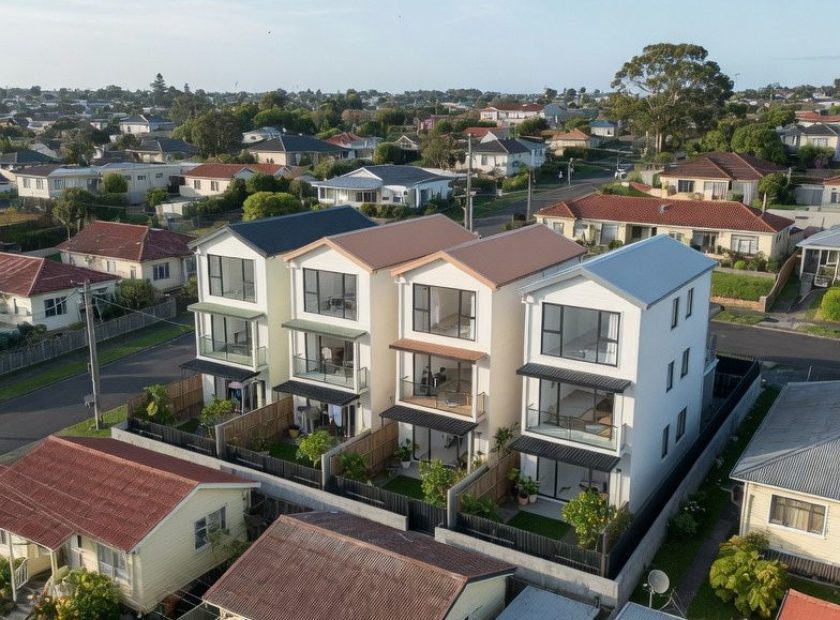
Rodney’s 72 applications reflect the northern growth corridor — Milldale, Wainui, Warkworth — plus lifestyle builds across the rural north. Then comes the southern and central-southern block: Ōtara-Papatoetoe (60), Māngere-Ōtāhuhu (58) and Maungakiekie-Tāmaki (56), alongside Whau (60) out west covering Avondale and New Lynn. These are the areas where the Auckland Unitary Plan — the single planning rulebook covering the whole region — zones large tracts of land for medium-density housing, and where townhouse projects on former single-house sections have become the standard development model.
Important: Auckland’s residential zoning rules are mid-change. Plan Change 120, notified in November 2025, proposes revised zones and heights across much of the city, with final decisions expected around mid-2027. Until then, the operative Unitary Plan rules apply — always check your site’s current zoning with Auckland Council before committing to a design.
🏠 Development tip: A suburb ranking high on this list isn’t automatically the best place for your build. High activity can also mean more competition for trades and more pressure on infrastructure capacity. Feasibility is always site-specific.
The Monthly Trend: New Home Consent Applications More Than Doubled From January to May
The six-month window also shows a clear direction of travel.
| Month | New-dwelling applications lodged | Note |
|---|---|---|
| December 2025 | 33 | Partial — 21 to 31 December only |
| January 2026 | 81 | Holiday shutdown suppresses lodgements |
| February 2026 | 118 | — |
| March 2026 | 176 | — |
| April 2026 | 151 | — |
| May 2026 | 185 | Highest month in the window |
| June 2026 | 145 | Partial — 1 to 20 June only |
Monthly new-dwelling consent applications — Auckland, H1 2026
From 81 applications in January to 185 in May — a 128% increase in four months. Two honest caveats before anyone reads too much into that. January is always soft: half of Auckland’s development industry is at the beach, and lodgements follow. And June’s 145 covers only 20 days — don’t read the final column as a decline, because on a per-day basis June is running close to May.
Even allowing for the seasonal ramp, the direction matches the national picture. Stats NZ’s building consent data — the later-stage, official measure — reported in its April 2026 release that consent numbers have been rising, with New Zealand consenting 7.3 new dwellings per 1,000 residents in the year to April 2026, up from 6.3 a year earlier, and multi-unit homes leading the increase. What we’re seeing in Auckland’s resource consent pipeline is consistent with that: activity building through the first half of 2026, weighted toward multi-dwelling projects in intensification zones.
🏠 Development tip: Rising lodgement volumes eventually flow through to council processing workloads. If you’re planning to lodge later in 2026, getting your application in complete and well-documented the first time matters more in a busy pipeline — requests for further information are where timelines blow out.
Planning a New Build? How to Read This Data For Your Own Project
A few practical takeaways, whether you’re a family weighing up where to build or you own a section and you’re curious what’s possible.
Activity signals viability — not price
The boards at the top of this list are where developers and homeowners are finding projects that stack up right now. That’s useful intelligence. It tells you where zoning, land availability and demand are aligning. It doesn’t tell you what a build costs on your street, or whether your section works — those answers only come from site-specific feasibility.
Not every new home appears in this data
Plenty of new builds never need a resource consent at all. A single home that complies with all its zone standards is typically a permitted activity — it goes straight to building consent (the council’s approval of the construction itself). So the 889 figure understates total new-home activity, and it skews toward projects that push density, height or coverage beyond standard rules — which is exactly why it’s a good indicator of development pressure.
The consent pathway is where most first-timers get stuck
Imagine you own a 750m² section in Meadowbank and this data has you wondering whether two homes would fit. The honest answer: it depends on your zone, your services, and about a dozen site-specific factors — and the sequencing of resource consent, engineering approvals and building consent is where first-time developers most often lose months. That’s the part we run end-to-end at Superior Homes, from designing and building a new home in Auckland through the full consent-to-completion building process, with our architectural design partner Sonder Architecture handling design and consent documentation. Not sure what your section qualifies for? That’s a 30-minute conversation, not a leap of faith.
Methodology — Read This Before Citing the Data
We want this data used, so here’s exactly what it is and isn’t.
Source: Auckland Council’s register of recent resource consent applications, which lists applications lodged in the preceding 26 weeks and is updated weekly. Our extract covers 21 December 2025 to 20 June 2026: 5,339 applications in total.
How we counted: the 889 figure is applications whose descriptions mention a new dwelling, identified by keyword matching. Five things to keep in mind:
1. Lodgements are not approvals. These are applications made, not consents granted. Some will be declined or withdrawn.
2. Resource consent is not building consent. This data sits earlier in the pipeline than Stats NZ’s official building consent series — and later-stage figures will differ.
3. One application is not one dwelling. A single application can cover a multi-unit development of ten or more homes, so these counts understate dwelling numbers in intensification areas.
4. Both end months are partial. December covers 21–31 December only; June covers 1–20 June only. Do not read either as a monthly trend point without that adjustment.
5. Keyword matching isn’t perfect. A small number of matched applications may reference a new dwelling incidentally rather than proposing one.
Anyone can reproduce this from the public register. If you use the tables or charts, credit Superior Homes with a link to this page — that’s the whole deal.
Where Auckland Builds Next
Six months of data says Auckland’s new-home pipeline is concentrated, climbing, and running on three engines at once: greenfield growth in the east and north, infill in the established eastern suburbs, and townhouse intensification across the south and west. We’ll update this analysis when the second-half 2026 data lands — the H2 comparison is where the real trend story starts.
➡ Book a free consultation with Superior Homes
➡ See our completed Auckland projects
➡ Learn more about building a new home with Superior Homes
Which Auckland local board has the most new home consent applications in 2026?
Howick Local Board leads Auckland with 131 resource consent applications mentioning a new dwelling between 21 December 2025 and 20 June 2026, based on Auckland Council's public consent register. That's 14.7% of the region's total, driven largely by continued growth in Flat Bush and Ormiston. Ōrākei (94) and Rodney (72) rank second and third.
How many new dwelling consent applications were lodged in Auckland in the first half of 2026?
889 resource consent applications mentioning a new dwelling were lodged with Auckland Council between 21 December 2025 and 20 June 2026, out of 5,339 total resource consent applications on the council's public register — roughly one in six applications region-wide. Note these are lodgements (applications made), not approvals.
What is the difference between a resource consent and a building consent in NZ?
A resource consent is Auckland Council's permission to use land in a particular way — needed when a project goes beyond what the Auckland Unitary Plan zone rules permit. A building consent is the council's approval of the construction work itself, confirming it will meet the Building Code. Many projects need both, and the resource consent usually comes first.
Does a resource consent application mean a home will definitely be built?
No. An application is a lodgement, not an approval — some applications are declined, withdrawn, or approved but never acted on. Resource consent data is best read as a forward indicator of planned development activity, sitting one step earlier in the pipeline than Stats NZ's official building consent figures.
Do all new homes in Auckland need a resource consent?
No. A single new home that complies with all of its zone's standards under the Auckland Unitary Plan is typically a permitted activity and goes straight to building consent. Resource consent is generally triggered when a project exceeds standards — extra dwellings, height, site coverage, or earthworks. That means consent-application data understates total new-home activity.
Where does this Auckland new home data come from?
From Auckland Council's public register of recent resource consent applications, which lists all applications lodged in the preceding 26 weeks and is updated weekly. Superior Homes extracted the register for 21 December 2025 to 20 June 2026 and identified applications mentioning a new dwelling. The full methodology, including limitations, is published in the article.
Why are new home consent applications rising in Auckland in 2026?
Monthly lodgements rose from 81 in January 2026 to 185 in May 2026. Part of that is seasonal — January is always quiet over the holiday shutdown. But the direction matches Stats NZ's national building consent data, which shows dwelling consents per 1,000 residents rising from 6.3 to 7.3 in the year to April 2026, with multi-unit homes leading the increase.
Which Auckland suburbs are in the Howick Local Board area?
Howick Local Board covers east Auckland suburbs including Howick, Botany, Flat Bush, Ormiston, Pakuranga and Bucklands Beach. Its top ranking for new-dwelling consent applications in H1 2026 mainly reflects Flat Bush and Ormiston, one of New Zealand's largest master-planned residential growth areas.
Free Guide: Avoid Costly Mistakes When Building or Developing
Download our free guide — everything you need to know before you build or develop in Auckland, put together by the Superior Homes team.