Auckland New Builds: The Complete 2026 Buyer’s Guide
Quick answer: Auckland new builds in 2026 sit at roughly $3,200–$5,500+ per m² to construct (before land and site costs), with townhouses now making up more than half of the homes consented across the region. Where you build, who you build with, and the kind of home you choose matter more than ever.
Last updated: 08 Sep 2026
More than half the new homes signed off in Auckland over the past year weren’t standalone houses at all. They were townhouses. That single fact tells you most of what you need to know about where the Auckland new build market has landed in 2026 — denser, more affordable per dwelling, and concentrated in a handful of growth suburbs.
If you’re researching Auckland new builds right now, you’re probably one of two people. You might be a family or first-home buyer trying to work out whether a brand-new home stacks up against an existing one — and which suburbs give you the best shot. Or you might be an investor weighing up where the numbers work and what’s actually being built. This guide is written for both, and we’ve split the audience-specific parts clearly so you can skip to what’s relevant.
We build new homes and townhouses across Auckland, manage the consent and construction process end to end, and work alongside architects and architectural designers throughout. So this isn’t a listing page or a sales pitch dressed up as advice. It’s the market as we see it from the inside: what’s happening, where the value is, how to tell a good builder from a risky one, and what a new build genuinely costs once the extras are in.
One thing upfront, because it trips people up. The rules around what you can build on an Auckland residential section changed late in 2025, and the first-home buyer support that existed a couple of years ago has shrunk. We’ll cover both honestly rather than repeating the version of the market that’s already out of date.
What’s Happening in the Auckland New Build Market Right Now?
The short version: building is back on the up, and Auckland is doing the heavy lifting. In the year to January 2026, around 36,900 new homes were consented nationally, and Auckland alone accounted for roughly 15,800 of them — up about 13% on the year before, and the majority of the national increase. Those figures come from Stats NZ building consent data, which is collated from every council consent application in the country.
That recovery follows a genuinely rough patch. Consent numbers fell hard from the 2022 peak of more than 50,000 a year, and plenty of building companies didn’t make it through. What’s pulled things back up is a mix of lower interest rates easing finance pressure, and a steady shift toward smaller, denser homes that more buyers can actually afford.
Townhouses are now the dominant new build in Auckland
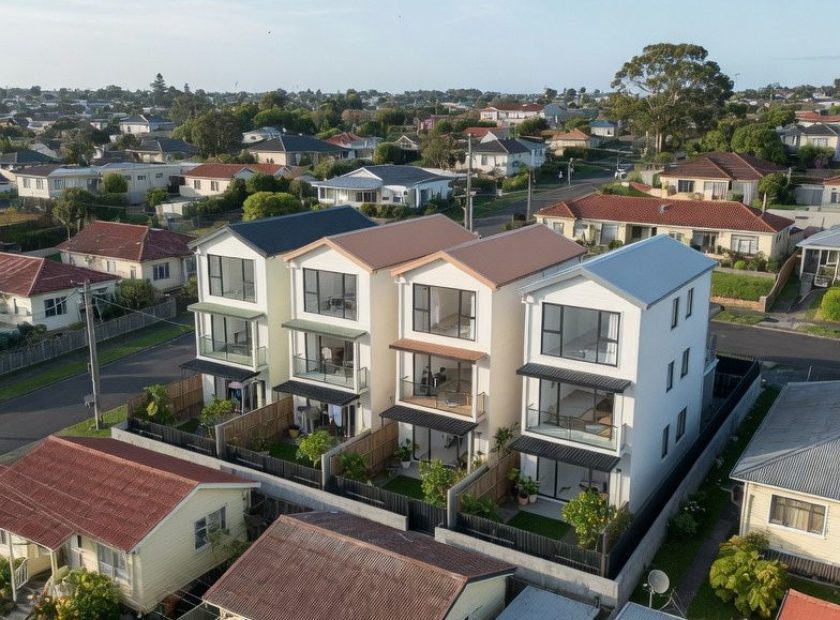
This is the structural change worth understanding. Over half of the new homes consented in Auckland in the past year were multi-unit dwellings, mostly townhouses, rather than standalone houses. Nationally, townhouses, flats and units made up the largest single category, well ahead of traditional standalone houses.
Why does that matter to you as a buyer? Because the “new build” you’re picturing, a four-bedroom standalone on its own section, is now the minority product in a lot of Auckland suburbs. The growth has been led by local board areas like Ōrākei, Maungakiekie-Tāmaki and Howick. If you’re set on a standalone home, you’ll increasingly find them in the growth corridors on Auckland’s edges rather than the established inner suburbs. If the attached product is what your site or your budget actually points to, these are the attached and duplex homes we build in the medium-density suburbs.
🏠 Development tip: If you want a standalone new home in an established suburb, start your search early and be realistic — most of what’s being consented closer to the city is now attached or duplex-style. Growth areas like Flat Bush, Karaka and Hobsonville Point still offer standalone new builds at more workable land prices.
Auckland’s intensification rules are mid-change — read this before you assume what you can build
Here’s the part most older articles get wrong. For a few years, the Medium Density Residential Standards (MDRS — the national rules that let owners build up to three homes of up to three storeys on most urban sections without a resource consent) applied across Auckland. They don’t apply in the same blanket way anymore.
Auckland Council partially withdrew Plan Change 78 and the MDRS from 5pm on 9 October 2025, and notified a replacement, Plan Change 120, on 3 November 2025. A resource consent, by the way, is the council’s formal permission to use land in a particular way; it’s separate from a building consent, which is permission for the actual construction. Auckland Council opened an additional submission period on PC120, including a set of proposed changes to it, on 27 August 2026, and submissions close at 5pm on 24 September 2026.
The changes matter, because the picture is now much narrower than it was. After the Government reduced Auckland’s minimum housing capacity requirement from around two million homes to at least 1.4 million, the council’s newly proposed zoning changes affect only about 15 per cent of Auckland’s urban area; on the council’s own account the other 85 per cent “will now remain unchanged from the rules adopted in the Auckland Unitary Plan in 2016”.
Within 10 kilometres of the city centre, buildings of 10 or 15 storeys are proposed in some well-connected locations. Further out, heights in walkable catchments around metropolitan centres and rapid transit stations would generally reduce to the Government-required six storeys, and the extra capacity previously proposed around smaller local centres and most frequent bus routes beyond 10 kilometres would be removed. Some sites that could have done three townhouses as of right under the old rules may sit under different provisions once this settles.
Important: Don’t rely on the old “three dwellings, three storeys as of right” assumption for an Auckland section in 2026. The MDRS-based Plan Change 78 was partially withdrawn from 9 October 2025 and replaced with Plan Change 120, which was notified in 2025 and is not yet finalised. An additional submission period on PC120 and the council’s proposed changes to it runs to 5pm on 24 September 2026. After submissions and public hearings, an Independent Hearings Panel makes recommendations, and Auckland Council has said it expects to make final decisions in mid-2027. Until then, always confirm the current zoning and rules for your specific property through Auckland Council before you bank on a particular yield. See Auckland Council’s Plan Change 120 page.
For most buyers reading this, the practical takeaway is simple. The exact number of homes a section can hold is no longer a safe back-of-the-envelope guess — it needs checking against the current rules for that property. That’s exactly the kind of thing we sort out at the feasibility stage before anyone commits to a design or a price. Not sure what your section qualifies for under the new rules? That’s a conversation worth having before you fall in love with a plan.
If you want the bigger picture on costs across the whole market, our new home building service page lays out how we approach a build from design through to handover, and it is the same sequence whether the job is one house or a block of six.
The Best Auckland Suburbs for a New Build in 2026
There’s no single “best” suburb — it depends entirely on whether you’re building a home to live in or buying for returns. So we’ve split this the way it actually works in practice. Family and first-home buyers should be looking at growth areas with land still available; investors should be looking at the medium-density suburbs where the numbers stack up.
For families and first-home buyers: growth suburbs with land
If you want a standalone new home and a section that isn’t squeezed, the growth corridors are where the value sits. Hobsonville Point, Flat Bush, Papakura, Karaka, Long Bay, Millwater, Whenuapai and Beachlands all offer new build options with more land per dollar than the inner suburbs.
Hobsonville Point and Long Bay are more established and command a premium, but they come with planned amenities — schools, parks, ferry and transport links. Papakura and Karaka, further south, tend to give you more house and land for the same money, which is why a lot of first-home families end up looking there. The pattern we see repeatedly is a family who starts out set on the eastern bays, runs the numbers on land, and ends up with a larger four-bedroom home further south for what a smaller place would have cost them closer in. Whether that trade is worth it depends entirely on the commute and the schools, not on the build.
For investors and developers: medium-density suburbs
Different game entirely. Investors are generally chasing yield and development feasibility, not a view. The suburbs doing the heavy lifting for medium-density development are Mt Albert, New Lynn, Henderson, Papatoetoe, Manurewa, Glen Innes and Panmure — well-connected, with land that supports townhouse and multi-unit projects.
These are the areas where the townhouse boom has concentrated, and where transport links and existing infrastructure make multi-unit projects work. The caveat, again, is the zoning transition — what a site allowed under the old MDRS rules and what it allows under Plan Change 120 may differ, so feasibility checks matter more in 2026 than they did even a year ago. We dig into this on our property development page.
Established and high-value suburbs
Remuera, Epsom, Mt Eden, Takapuna and Devonport remain the premium end. New builds here are usually custom standalone homes or careful infill on larger sections, and land is the dominant cost. In the inner suburbs, the high price of land often means a new build only makes sense if you already own the section or you’re after a genuinely one-off custom home. Note too that current government direction enables much greater height around the train stations benefiting from the City Rail Link: at least 15 storeys around Maungawhau/Mt Eden, Kingsland and Morningside, and at least 10 storeys around Baldwin Ave and Mt Albert. That’s another reason to check the specific rules before assuming what’s possible.
| Buyer type | Best-fit suburbs | Typical new build product |
|---|---|---|
| Family / first home | Hobsonville Point, Flat Bush, Papakura, Karaka, Long Bay, Millwater, Whenuapai | Standalone homes, larger sections |
| Investor / developer | Mt Albert, New Lynn, Henderson, Papatoetoe, Manurewa, Glen Innes, Panmure | Townhouses, multi-unit, duplex |
| Premium / custom | Remuera, Epsom, Mt Eden, Takapuna, Devonport | Custom standalone, infill |
| Growth corridor | Pukekohe, Kumeu, Riverhead | House and land, standalone |
🏠 Development tip: Suburb choice isn’t just about price — check the section’s contour and soil before you commit. A flat site in Papakura can be thousands cheaper to build on than a sloping clay site in a pricier suburb once retaining and foundations are factored in.
New Builds by Region: West, South, East, Central and the North Shore
Auckland is big enough that “where should I build” really means “which side of the city”. Each region has a different dominant product, a different land cost and a different reason people end up there.
West Auckland is where the volume is. Henderson, Massey, Te Atatū, Swanson and Ranui carry a lot of the townhouse and duplex activity, land is cheaper per square metre than the isthmus, and the Western Line plus the north-western motorway carry the commute. Whenuapai and Hobsonville Point sit at the top of the western market, where you are paying for planned amenity rather than raw land.
South Auckland gives you the most house for the money, and the widest quality spread. Papakura, Takanini, Manurewa, Flat Bush, Karaka and Drury all have new build stock, from group-build standalone homes to full subdivisions. Drury is the one to understand properly: it is an Investment Priority Area for development contributions, which means the council’s growth charge per dwelling runs materially higher than the Auckland average, and that has to sit in the feasibility from day one.
East Auckland is land-constrained, so the product is infill. Howick, Botany, Bucklands Beach and Beachlands see more single replacement homes and small two-to-four-unit developments than greenfield estates. Expect to compete for sites, and expect the section to be the majority of your budget.
Central Auckland is where the plan change matters most. The proposed heights of 10 or 15 storeys sit inside 10 kilometres of the city centre, so central sites carry the most upside and the most rule risk at the same time. On the ground it is mostly custom standalone homes and careful infill, with special character overlays across Mt Eden, Epsom, Kingsland and parts of Remuera doing more to shape what is possible than the zone does.
The North Shore splits in two. Rosedale, Glenfield, Wairau Valley and Albany have the flat post-war sections and the services already in the ground, which is why they carry so much of the Shore’s infill and minor dwelling work. Devonport, Takapuna and the coastal bays have the sections and the values, but coastal-hazard and special character overlays mean the planning check comes before the design brief. If a second dwelling out the back is the actual goal rather than a whole new house, our guide to Auckland’s consent-free granny flat rules covers that path.
Want to see what we’ve actually built and where? Our completed Auckland projects show the kind of homes that suit each of these areas, and they are the fastest way to sanity-check a suburb against a budget.
Buying a New Build vs. Building Your Own — What’s the Difference?
People use “new build” to mean two quite different things, and the choice between them shapes your whole experience. You can buy a finished or near-finished new home off a developer, or you can build your own from a section and a design. Both are new builds. They feel nothing alike.
Buying a completed new build
This is the simpler path. You buy a home that’s already built or under construction, often off the plans, and you move in when it’s done. Less stress, fewer decisions, a clearer price. The trade-off is less control — you take the layout, finishes and section that come with it.
There’s a real financing advantage here too. New builds sit outside the loan-to-value restrictions the Reserve Bank applies to existing homes, so lenders can generally accept a smaller deposit on a new build than on an established house, which is why they have stayed popular with first-home buyers even after the First Home Grant ended (more on that shortly). The same exemption applies to the debt-to-income restrictions, which can matter for investors. The actual deposit a bank will accept depends on the lender and your circumstances, so confirm it with your bank or a licensed mortgage adviser rather than a blog. How the money is actually drawn down through a build is a separate question, and one we cover in our guide to how you pay for an Auckland new build.
Building your own from scratch
More work, more reward. You choose the section, the design and every finish, and you end up with a home built around how you actually live. This is where working with an architect pays off — and where the process can either run smoothly or fall apart, depending on who’s managing it. We work with designers and architects throughout, including our group architectural design partner Sonder Architecture, so the design and build talk to each other from day one rather than getting handed across a gap.
The honest downside: building your own takes longer and carries more risk if it’s poorly managed. Variations, consent delays and budget creep are real. That’s why the project management side matters as much as the building itself — something we cover on our building process page.
New build vs. existing home — the trade-offs
And then there’s the question underneath all of it: why a new build at all, rather than an existing house? A few genuine advantages. A new home comes with a Code Compliance Certificate (CCC — the document Auckland Council issues confirming your finished build meets the Building Code), modern insulation and weathertightness, and far lower maintenance for the first decade. It also comes with statutory protection that applies whether or not anyone sells you a guarantee: the Building Act 2004 implies a set of warranties into every residential building contract, including that the work is done in a proper and competent manner and complies with the Building Code (section 362I), and it requires your builder to remedy a defect you notify within a year of completion (section 362Q). Separately, section 393(2) bars civil proceedings relating to building work brought 10 years or more after the act or omission complained of, which is where the familiar “10 years” comes from.
The flip side is that new builds usually cost more per square metre than buying established, and you wait for it. An existing home is here now; a build is months away. For some buyers the certainty of new, meaning known condition, warranties and lower running costs, is worth the premium. For others it isn’t. There’s no universal right answer, and we’d rather you went in clear-eyed than sold on it.
🏠 Development tip: Buying off the plans? Get the build contract and the specification schedule reviewed before you sign. The difference between a “standard” and “premium” fit-out can be tens of thousands, and it’s all in the fine print of what’s included.
Where to find new homes for sale in Auckland
Searching for new homes for sale in Auckland throws up two very different kinds of listing, and it pays to know which you’re looking at. The first is a completed or near-completed home a developer is selling directly, ready to settle on when it’s finished. The second is an off-the-plan sale, where you commit to a home before it’s built, usually with a deposit held until completion.
Completed new builds are the fastest route in — you can inspect the actual home, there’s no construction risk left to carry, and settlement is close. The trade-off is you take the finishes and section as they are. Off-the-plan sales let you lock in today’s price on a home that settles months away, which can work in your favour in a rising market, but you’re buying off a plan and a specification schedule rather than a finished product. Read that schedule the way you’d read a contract, because that’s what it is.
Most new homes for sale in Auckland cluster in the growth corridors and medium-density suburbs we covered earlier, and a lot of the best stock never hits the big listing portals — it moves through developers directly before it’s advertised. Our completed Auckland builds page is the best read on the kind of stock we bring through, and what we have available at any time changes month to month. And whichever route you take, it’s worth understanding how building consent works on an Auckland build so you can read a listing’s stage and status properly rather than taking the marketing at face value.
🏠 Development tip: On an off-the-plan purchase, check the sunset clause — the date by which the build must finish or the contract can be cancelled. A vague or distant sunset date leaves your deposit tied up with little protection if the project stalls.
What to Look for in an Auckland New Home Builder
This is the section that saves people the most money and grief, so we’ll be blunt. The builder you choose matters more than the suburb, the design or the spec — because a good builder protects your budget and a bad one quietly destroys it. Auckland has seen builders go under mid-project in the last few years. Choosing well isn’t paranoia; it’s basic due diligence.
Check the licences and the guarantee
Start with the non-negotiables. Any builder doing or supervising structural work on your home must be a Licensed Building Practitioner (LBP — a tradesperson certified and required by law to carry out or supervise Restricted Building Work, the parts of a build that affect its weathertightness and structure). You can check a builder’s LBP status directly through the LBP public register, and the wider rules sit with MBIE’s Building Performance team.
Then ask what sits on top of the law. A third-party builder’s guarantee is a separate commercial product, not a statutory right, and what it actually covers, for how long and under what exclusions varies by provider. Ask for the policy wording rather than the logo, and read what happens if the builder goes into liquidation mid-project, because that is the scenario people buy these for. We pull the whole subject apart in our guide to what actually protects your new build.
Understand fixed-price vs. cost-plus contracts
This single decision shapes your financial risk. A fixed-price contract locks in the total upfront: fewer surprises, but the builder prices in a margin for risk. A cost-plus contract charges actual costs plus a margin, which can be cheaper but lets the budget blow out. For most first-time builders, the certainty of a fixed price is worth paying for. You know your number, and you can budget around it.
“The cheapest quote almost never ends up the cheapest build. The builders who blow budgets are usually the ones who quoted low to win the job and made it back in variations. Look at what’s actually included before you compare prices — that’s where the real difference hides.”
— Superior Homes Team
Questions worth asking before you sign
A handful of questions separate the builders worth your time from the ones to avoid.
How many builds do you have running at once? Who is my point of contact, and how often will I hear from them? What is in the fixed price, and what is specifically excluded? How do you handle variations? Can I talk to your last three clients?
A good builder answers all of these without flinching. If someone gets cagey about references or won’t put inclusions in writing, that tells you what you need to know. We manage the full process, meaning consents, designers, trades and reporting, under one roof, which is the model we’d want if we were the ones building. Our project management page explains how that works in practice.
🏠 Development tip: Always get the references and actually ring them. Ask the previous clients one question above all: “Did the final price match the quote, and if not, why?” Their answer tells you more than any glossy brochure.
New Build Costs, Timelines, and What to Expect in 2026
Let’s talk numbers, honestly. Building a new home in Auckland in 2026 typically runs $3,200–$5,500+ per m² for construction alone (including GST), with most standard-to-mid-spec family homes landing around $3,200–$4,500 per m². Stats NZ data puts the average new build across the country at roughly $460,000 for an average size of about 141m², and Auckland sits at the higher end of the national range because of land, labour demand and council costs. If you want the figure pulled apart properly, we go deep on it in our guide to how much it costs to build a house in NZ.
What a new build actually costs by spec level
Per-square-metre is a starting point, not a final price. Here’s roughly how it breaks down by specification in Auckland for 2026.
| Spec level | Cost per m² (incl GST) | What it covers |
|---|---|---|
| Entry-level | ~$2,500–$3,000 | Basic finishes, simple design, group-build standard |
| Mid-range | ~$3,000–$4,500 | Good finishes, quality joinery, the typical family home |
| High-end / custom | ~$4,500–$6,000+ | Architectural design, premium materials, custom detail |
| Add for site costs | +20–30% on top | Site works, consents, services, fees, landscaping |
The number that catches people out is that last row. The builder’s per-m² quote covers the house. It usually doesn’t cover site works, retaining, service connections, council fees or landscaping — and those can add 20–30% to your total. Every metre of fall across a building platform, clay soils, narrow access, distance to services: all of it adds cost. A realistic Auckland total for a standard 180–200m² four-bedroom home, once everything’s in, often sits between roughly $850,000 and $1.25 million.
How long does an Auckland new build take?
Plan for the whole journey, not just the construction. Design and consent can take several months before a spade hits the ground. Auckland Council has 20 working days to process a building consent, but that clock only starts once a complete application is lodged, and subdivision or resource consents take considerably longer. We programme 12 to 18 months from contract to keys on a custom Auckland home, with roughly 4 to 8 months of that in design, documentation and consenting and 6 to 10 months on site from start to practical completion. Anyone promising dramatically faster is either building something very simple or cutting a corner you’ll find later. Every clock in that sequence, including the statutory ones the council has to meet, is broken down in our guide to how long an Auckland build really takes.
For first-home buyers: the support that actually exists in 2026
This is where we need to correct a common misconception. The First Home Grant, the old subsidy of up to $10,000 for a new build, was scrapped in May 2024 and is no longer available. KiwiBuild was wound down too. If an article or agent tells you to count on the Grant, they’re working off old information.
Important: The First Home Grant closed to new applications on 22 May 2024 and has not been reinstated. The support that does still exist for first-home buyers is the KiwiSaver first-home withdrawal (you can withdraw most of your KiwiSaver balance toward a first home after three years of membership) and the First Home Loan, a low-deposit scheme available through Kāinga Ora and participating banks. Check current eligibility directly with Kāinga Ora.
The genuine advantage that remains for new builds is deposit efficiency: because they sit outside the Reserve Bank’s loan-to-value restrictions, a lender can accept a smaller deposit on a new build than on an established house. For a first-home family, that is often the single biggest reason a new build is more reachable than buying established. Ask your bank or a licensed mortgage adviser what they will actually lend on, since the settings and each lender’s appetite move.
For investors: what the returns look like
Different lens, and one where the honest answer has changed. The tax advantage new builds used to carry has largely been legislated away: interest deductibility went back to 100 per cent for all residential rentals from 1 April 2025 regardless of when the property was bought, and the separate new-build bright-line clock is gone now that the bright-line test is two years for property sold on or after 1 July 2024. There is no depreciation on the building itself either, only on chattels and fit-out, which a new build does happen to have more of.
What genuinely remains is deposit efficiency through the loan-to-value exemption, lower maintenance in the early years, and day-one compliance with the Healthy Homes standards as a by-product of building to current Code. The rules that now actually apply are set out in our guide to new build investment property in New Zealand. The townhouse-led supply means there’s product coming through in the medium-density suburbs we covered earlier. The risk sits in feasibility: land cost, the zoning transition, and getting the build managed so margins don’t erode. If you’re weighing a development or an investment build, our property investment service and our record of finished Auckland projects are the right starting points. The broader market in 2026 has been patient rather than booming, with REINZ data showing only modest price gains and properties taking longer to sell, so the build itself rather than capital gain has to carry the numbers.
🏠 Development tip: Whether you’re a family or an investor, build a contingency of 10–15% into your budget on top of the quote. It’s the buffer that turns a stressful build into a manageable one — and the people who skip it are the ones who run out of money before the driveway’s poured.
Where to From Here
Auckland new builds in 2026 come down to three decisions that matter more than the rest: the right suburb for your goal, the right type of home for a market that’s tilted toward density, and a builder who’ll hold the price they quoted. Get those right and a new build is one of the more rewarding things you’ll do. Get them wrong and it’s one of the more expensive lessons.
We’re an active Auckland builder with completed projects across the city, so if you want a straight read on what your section can do, what a build will really cost, or which suburb fits your budget, that’s exactly what a first conversation is for. You can see the way we run a new build end to end before you commit to anything. No pressure, no script.
➡ Book a free consultation with Superior Homes
➡ See our completed Auckland projects
➡ Learn more about building a new home with Superior Homes
Are new builds worth buying in Auckland in 2026?
For many buyers, yes. New builds come with modern insulation and weathertightness, a Code Compliance Certificate, low maintenance for the first decade, and the Building Act warranties implied into every residential building contract. They also sit outside the Reserve Bank's loan-to-value restrictions, so a lender can generally accept a smaller deposit on a new build than on an established home, which makes them more reachable for first-home buyers. The trade-offs are a higher cost per square metre than buying established, and the wait while it's built. Whether it's worth it depends on whether certainty and low running costs outweigh those for you.
How much does a new build cost in Auckland in 2026?
Construction typically runs $3,200–$5,500+ per m² including GST in 2026, with most standard-to-mid-spec family homes around $3,200–$4,500 per m². Stats NZ data puts the average New Zealand new build at roughly $460,000 for about 141m². On top of the builder's per-m² quote, budget another 20–30% for site works, consents, service connections and landscaping. A realistic total for a standard 180–200m² four-bedroom Auckland home, fully finished, often sits between $850,000 and $1.25 million.
What are the best Auckland suburbs for a new build?
It depends on your goal. Families and first-home buyers wanting standalone homes with land should look at growth suburbs like Hobsonville Point, Flat Bush, Papakura, Karaka, Long Bay, Millwater and Whenuapai. Investors building townhouses or multi-unit projects do better in medium-density suburbs like Mt Albert, New Lynn, Henderson, Papatoetoe, Manurewa, Glen Innes and Panmure. Premium custom builds suit Remuera, Epsom, Mt Eden, Takapuna and Devonport, where land is the dominant cost.
Do I still get the First Home Grant for a new build?
No. The First Home Grant — previously up to $10,000 for a new build — was scrapped in May 2024 and closed to new applications on 22 May 2024. It has not been reinstated. The support that still exists for first-home buyers is the KiwiSaver first-home withdrawal (available after three years of membership) and the First Home Loan, a low-deposit scheme through Kāinga Ora and participating banks. New builds also sit outside the Reserve Bank's loan-to-value restrictions, so lenders can generally accept a smaller deposit than on an established home. Check current eligibility with Kāinga Ora and confirm the deposit with your bank or a licensed mortgage adviser.
How long does it take to build a new home in Auckland?
From the first design conversation to handover, a custom Auckland new build commonly takes 12 months or more. Design and consent take several months before construction starts — Auckland Council's standard building consent processing target is 20 working days, but only once a complete application is lodged, and resource or subdivision consents take longer. Construction of a standard home then runs several months on top. Anyone promising a much faster timeline is either building something very simple or cutting a corner.
What's the difference between buying a new build and building your own?
Buying a completed or off-the-plan new build means less stress and a clearer price, but you take the layout, finishes and section as they come. Building your own from a section and design gives you full control and a home built around how you live, but it takes longer and carries more risk if it's poorly managed. Both are new builds — they just feel completely different to go through. The project management behind a custom build is what determines whether it runs smoothly.
Can I still build three townhouses on my Auckland section?
Not automatically anymore. Auckland Council partially withdrew Plan Change 78 and the Medium Density Residential Standards (MDRS) from 9 October 2025, and notified a replacement, Plan Change 120, on 3 November 2025. The old blanket rule allowing three dwellings of up to three storeys as of right no longer applies in the same way, and the new rules are not yet finalised. What your section allows now has to be checked against the current provisions for that specific property through Auckland Council before you plan a yield.
Why are most Auckland new builds townhouses now?
Affordability and supply. More than half the new homes consented in Auckland over the past year were multi-unit dwellings — mostly townhouses — rather than standalone houses. Smaller, attached homes cost less per dwelling, fit more sites, and suit the demand for affordable urban options. Standalone new homes are increasingly found in the growth corridors on Auckland's edges, like Flat Bush, Karaka and Hobsonville Point, rather than in the established inner suburbs where land is expensive.
What deposit do I need for a new build in Auckland?
Less than on an established house, in most cases, because new builds sit outside the loan-to-value and debt-to-income restrictions the Reserve Bank applies to existing homes. That exemption is the mechanism behind the deposit advantage, and it helps both first-home buyers and investors. The actual figure depends entirely on your lender and your circumstances and the settings move, so confirm it with your bank or a licensed mortgage adviser rather than relying on a published percentage. For first-home buyers, the KiwiSaver first-home withdrawal can often form part of that deposit.
How do I choose a good Auckland new home builder?
Check the public LBP register for the individual who will carry out or supervise the restricted building work, since licences are held by people rather than companies, and ask what third-party guarantee they offer and read the policy wording rather than the logo, since cover, term and exclusions vary by provider and it is separate from the warranties the Building Act already implies into your contract. Understand whether you're on a fixed-price or cost-plus contract — fixed price gives certainty, cost-plus can blow out. Ask what's included and excluded in writing, how they handle variations, and to speak with their last three clients. A good builder answers all of this openly. The cheapest quote is rarely the cheapest finished build.
Which part of Auckland is best for a new build?
It depends on what you are building. West Auckland, around Henderson, Massey, Te Atatū and Swanson, carries a lot of the townhouse and duplex volume at lower land cost. South Auckland, through Papakura, Takanini, Flat Bush, Karaka and Drury, gives the most house for the money, though Drury is an Investment Priority Area so the council development contribution per dwelling runs above the Auckland average. East Auckland is land-constrained and mostly infill. Central Auckland carries both the highest land cost and the most proposed height, since the 10 and 15 storey provisions in Plan Change 120 sit within 10 kilometres of the city centre. On the North Shore, the flat post-war sections through Rosedale, Glenfield and Albany suit infill, while Devonport and the coastal bays need the planning check done first.
Do I need a resource consent to build a new home in Auckland in 2026?
Often not for a single home that meets your zone's standards, but it is no longer safe to assume. The MDRS-based Plan Change 78 was partially withdrawn on 9 October 2025 and Plan Change 120 replaced it, and PC120 is still not finalised: an additional submission period on the council's proposed changes to it closes at 5pm on 24 September 2026, an Independent Hearings Panel then makes recommendations, and Auckland Council expects to make final decisions in mid-2027. The council has also said its newly proposed zoning changes affect only about 15 per cent of Auckland's urban area, with the rest staying on the rules adopted in the Unitary Plan in 2016. Confirm the rules for your specific property with Auckland Council, and take consenting and Building Code advice from a Licensed Building Practitioner.
References
- Stats NZ — Building consents issued (new dwelling volumes and average build cost)
- Auckland Council — Plan Change 120: Housing Intensification and Resilience (PC78 withdrawal and replacement)
- Kāinga Ora — First Home Loan (current first-home buyer support)
- MBIE Building Performance — Licensed Building Practitioners and the Building Code
- REINZ — New Zealand residential property market statistics
- Aucklanders get another say on Plan Change 120, 27 August 2026 — Auckland Council (OurAuckland)
- Building Act 2004, sections 362I, 362Q and 393 — New Zealand Legislation
Related guides from Superior Homes