The Building Amendment Bill 2026: What It Means for Your New Home in Auckland
Quick answer: The Building Amendment Bill 2026 is proposed law — not yet in force — that would bring in mandatory home warranties for new builds, shift the industry from joint-and-several to proportionate liability, and speed up some consents. It passed its first reading in July 2026 and is now with a select committee, with public submissions open until 15 November 2026.
If you’re building a new home in Auckland over the next couple of years, there’s a piece of proposed law worth understanding before you sign a build contract. It’s called the Building Amendment Bill 2026, and it’s a significant shake-up of the rules that sit behind your build.
Here’s the honest position first: it isn’t law yet. The Bill had its first reading in Parliament in early July 2026 and has been referred to a select committee, with public submissions open until 15 November 2026, according to the Ministry of Business, Innovation and Employment (MBIE). That means the detail can still change, and most of it won’t take effect until roughly a year after it’s passed. So this isn’t a “drop everything” moment. It’s a “know what’s coming” one.
But the direction is clear, and it matters to anyone building. The Bill does two things at once that usually pull against each other: it hands builders and councils a fairer liability system, and it hands you — the person paying for the house — stronger protection if something goes wrong. For a first-home builder or a family building a new home, the standout change is a mandatory warranty on new builds. For developers putting up townhouses, the liability and consenting changes are just as significant.
We build new homes across Auckland, from Hobsonville Point to Flat Bush, so we’ve read the Bill the way you would: what does this actually change for the house I’m about to build? This is our plain-English read of it — what’s in it, when it kicks in, and what it means for your project. We’ll point you to the primary sources so you can check the detail yourself, and where something is a legal or consent question, we’ll tell you to take it to a lawyer or Auckland Council rather than take our word for it.
What the Building Amendment Bill 2026 Actually Is (and Where It’s At)
The Building Amendment Bill 2026 is a set of proposed changes to the Building Act 2004 — the law that governs how homes get consented, built, inspected and signed off in New Zealand. The Government introduced it in late June 2026, and it passed its first reading on the way to a select committee.
A select committee is the stage where MPs take public and industry submissions and can recommend changes before the Bill goes back to Parliament for its later readings. MBIE has confirmed submissions are open until 15 November 2026. Nothing in the Bill is settled until it’s passed and receives Royal Assent (the formal sign-off that turns a Bill into an Act).
The five changes that matter for your build
Strip away the machinery and the Bill does five main things:
First, it introduces mandatory home warranties for new houses and qualifying residential work. Second, it changes who pays when a build goes wrong — a shift from “joint-and-several” to proportionate liability. Third, it speeds up parts of the consent process, including a fast-track 10-working-day pathway for eligible sustainable homes. Fourth, it makes professional indemnity insurance compulsory for the designers on your project. And fifth, it reforms how building research is funded through a single building levy.
We’ll take each one in turn, but the two you’ll feel most directly as a homeowner are the warranty and the liability changes.
🏠 Development tip: Timing is everything with this Bill. Most of the big changes are tied to when your building consent is granted, not when you sign your contract — so the date your consent is issued could decide which rules apply to your build.
Important: This is a Bill before Parliament, not current law, and the detail can change at select committee. For the live status and the text itself, check the New Zealand Parliament website (bills.parliament.nz) and MBIE’s building system pages (building.govt.nz). For how it affects your specific project, talk to your Licensed Building Practitioner (LBP — a certified builder legally required to carry out or supervise key building work) or Auckland Council.
So what does the headline change — mandatory warranties — actually cover?
Mandatory Home Warranties: The Big Win for New-Home Buyers
Right now, whether your new build comes with a written warranty largely depends on your builder. Plenty of good Auckland builders offer one voluntarily. Plenty of others don’t. The Building Amendment Bill 2026 would make a warranty compulsory on qualifying new residential work — so the protection no longer hinges on who you happened to hire.
What would be covered
Based on MBIE’s summary of the Bill, mandatory home warranties would apply to new houses, multi-unit residential buildings up to 10 metres in height, and renovations valued at $100,000 or more that involve restricted building work and require a building consent. Restricted Building Work (RBW) is work that, by law, must be done or supervised by an LBP — the structural and weathertightness parts of a build, essentially.
The minimum cover in the Bill is set at one year for general defects and 10 years for structural defects, and warranty providers would have to register with MBIE. That 10-year structural cover is the part that matters most: structural problems are the ones that are expensive and slow to surface.
How this sits alongside a builder’s guarantee
If you’ve been comparing Auckland builders, you’ll have seen guarantees offered already — and it’s worth understanding how a mandatory warranty differs from the voluntary cover in the market today. We’ve written a full explainer on what to look for in a builder’s guarantee, and the short version is that the Bill would put a legal floor under something that’s currently optional. A mandatory warranty doesn’t replace choosing a builder you trust — it just means the baseline protection is no longer negotiable.
| Warranty element | What the Bill proposes |
|---|---|
| Homes covered | New houses; multi-unit residential up to 10m; renos $100k+ involving RBW and a consent |
| General defects | Minimum 1 year of cover |
| Structural defects | Minimum 10 years of cover |
| Provider | Must be registered with MBIE |
Where the warranty stops — and why that matters
Two limits are worth knowing. Large apartment buildings over 10 metres fall outside the mandatory warranty scope, so a buyer in a tall apartment block wouldn’t get the same automatic cover as someone in a standalone home or low-rise townhouse. And some lawyers reviewing the Bill have flagged that a one-year minimum for general (non-structural) defects may not be long enough to catch slow-developing problems — weathertightness issues being the obvious one, given this country’s history with them.
“A mandatory warranty is a real step up for the person building a home — but read it like insurance, because that’s what it is. The one-year and 10-year figures are floors, not ceilings. If a builder offers longer, that tells you something.”
— Superior Homes Team
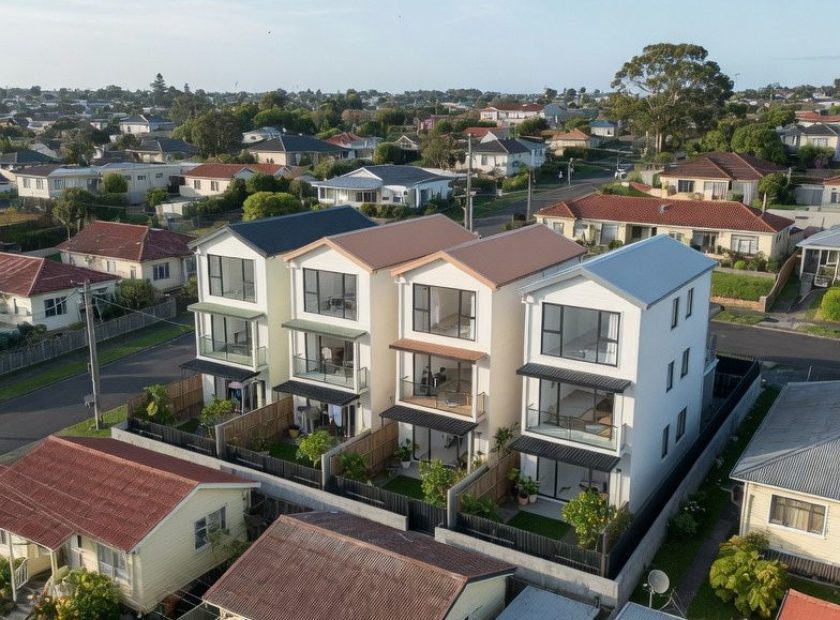
🏠 Development tip: Building a couple of townhouses under 10 metres in a Mixed Housing Urban suburb like Henderson or Papatoetoe? Your units would fall inside the mandatory warranty scope — factor the warranty cost into your feasibility numbers early.
Important: Exactly which homes qualify, and the fine print of the warranty terms, will be set out in the Act and later regulations. Confirm your project’s position with your LBP or a lawyer — don’t rely on a blog (including this one) for the legal detail.
Warranties protect you after the build. The next change decides who actually pays when a defect is found.
Proportionate Liability: A Quieter Change With Big Consequences
This one sounds technical, but stay with it — it changes your odds of getting a defect fixed. Today, New Zealand runs on “joint-and-several” liability. In plain terms: if several parties contributed to a defect and one of them has gone broke or vanished, you can chase any of the remaining solvent parties for the full cost, even if they were only a small part of the problem. In practice that often means the council — the Building Consent Authority (BCA) — ends up paying far more than its share, because it’s the party still standing.
What “proportionate liability” would change
The Bill proposes shifting to proportionate liability, where each party is responsible only for its own share of the loss. A designer who caused 20% of a defect pays 20%, not 100%. Councils are the clearest winners here, with their exposure limited to their actual contribution. Builders and designers benefit too.
For you as the homeowner, it’s more of a trade-off, and it’s worth being clear-eyed about it. Under a proportionate system, if one liable party is insolvent, you may not be able to recover their share from someone else — which is precisely why the Bill pairs this change with the mandatory warranties and compulsory designer insurance above. The warranty and insurance are the safety net that catches what proportionate liability lets fall through.
A worked example
Numbers make this clearer. Say a $400,000 weathertightness defect turns up on a finished home, and three parties share the blame: the builder (60%), the designer (25%) and the council that inspected it (15%). The builder has since gone under. Here’s the difference. Under today’s joint-and-several rules, you could pursue the council for the full $400,000 — the entire shortfall, including the insolvent builder’s share — and the council would then chase whatever it could from the others. Under proportionate liability, the council pays only its $60,000 share, and the builder’s $240,000 portion may simply be unrecoverable unless a warranty or insurance stands behind it. Same defect, very different outcome for you. That’s exactly why the mandatory warranty and compulsory designer insurance carry so much weight under the new model — they’re what stops the gap becoming yours.
When it would apply
Timing matters again. Legal analysis of the Bill indicates proportionate liability would apply to building work where the building consent is issued on or after the first anniversary of Royal Assent — roughly mid-2027 if the Bill passes on the current timeline. Consents granted before that date would stay under the current joint-and-several rules. That’s a genuine “which side of the line is my consent on?” question for anyone building around that time.
Important: Liability is a legal question with real financial stakes, and the transition rules are exactly the kind of detail that can shift at select committee. If you’re weighing up how this affects a claim or a contract, get advice from a construction lawyer — this section is general information, not legal advice.
🏠 Development tip: Proportionate liability makes it more important than ever to know that every party on your build carries real cover. Ask your builder and designer what insurance they hold — under the new system, their ability to pay their share is your protection.
Alongside protection, the Bill also tries to make building faster and a little cheaper to get moving.
Faster Consents: The Fast-Track Pathway and Quicker PIMs
Anyone who’s built in Auckland knows the consent wait can be the most frustrating part of the whole process. The Bill takes two runs at that problem.
A 10-working-day fast-track for sustainable homes
The Bill introduces a new fast-track consenting pathway, with the Building Consent Authority deciding eligible applications in 10 working days — half the standard 20-working-day timeframe. Eligibility, per MBIE, is aimed at residential buildings with solar generation and sustainable features. If you were already leaning towards solar and a warmer, more efficient home, this is a real incentive: the same choices that lower your power bills could also shorten your consent wait.
PIM processing cut from 20 to 10 working days
The Bill also halves the processing time for a Project Information Memorandum (PIM — the council report that tells you what it knows about your site before you build, covering things like flooding, drainage and special conditions) from 20 working days down to 10. A PIM often sits on the critical path early in a project, so shaving 10 working days off it is a genuine timeline saving.
| Step | Now | Under the Bill |
|---|---|---|
| PIM processing | 20 working days | 10 working days |
| Consent for eligible solar/sustainable homes | 20 working days (standard) | 10 working days (fast-track) |
None of this removes the need to get your application right the first time. Fast-track or not, an incomplete application still gets paused while the council asks for more information. This is where working with a builder and design team who know Auckland Council’s requirements earns its keep — and it’s why we work with architects, including our group’s architecture partner Sonder Architecture, through the whole building process so the consent goes in clean.
🏠 Development tip: If the fast-track survives select committee, designing in solar and sustainability features from day one could pay off twice — lower running costs and a faster consent. Worth raising at your first design meeting, not after the plans are drawn.
That covers the changes you’ll feel most. Two more round out the Bill.
The Rest of the Bill — and What It Means If You’re Building Now
Compulsory insurance for designers
The Bill would make professional indemnity insurance mandatory for the design professionals on your project — the architects, designers and engineers. Paired with proportionate liability, the logic is simple: if each party is only liable for its own share, each party needs to be able to actually pay that share. Compulsory cover is what makes proportionate liability safe for you.
A single building levy
The Bill also reforms building research funding, moving to a single building levy and channelling research money through an MBIE-overseen contestable process. This is more of an industry-plumbing change than something you’ll notice on your invoice, but it’s part of the same package.
If you’re a family building a new home
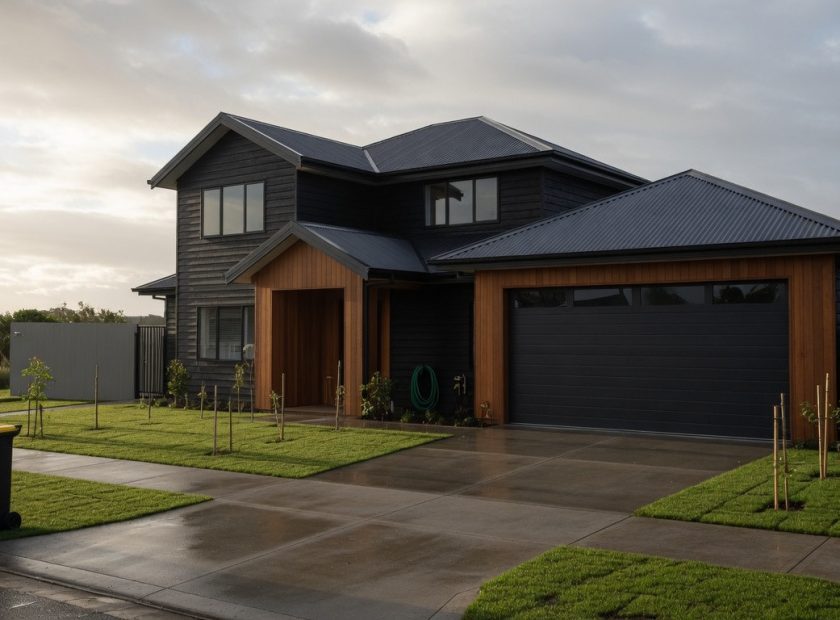
Here’s the practical read. If you’re building a standalone home or a low-rise townhouse in Auckland, this Bill is mostly good news for you — stronger warranty protection, compulsory insurance behind your designers, and potentially a faster consent if you go sustainable. The one thing to watch is timing: because the big protections attach to your consent date, when your consent is granted could determine whether the new rules apply. If you’re building right around the changeover, ask your builder how it affects you.
If you’re developing multiple homes
For developers, the picture is more of a balance sheet. Proportionate liability reduces your exposure to other parties’ failures, but mandatory warranties and compulsory insurance add cost that belongs in your feasibility from the start. If your townhouses sit under 10 metres — which most do in Mixed Housing Urban and Suburban zones under the Auckland Unitary Plan (the single planning document that sets Auckland’s zoning and development rules) — they’re inside the warranty scope. Build that into your numbers rather than discovering it late. For the development-side detail, our team can walk you through it as part of the new home build conversation.
What you can do while the Bill is still in progress
You don’t have to wait for the Bill to pass to protect yourself — the good habits are the same ones the new law is trying to make standard. Ask for a written guarantee in your build contract now, and read what it actually covers and for how long. Confirm your builder’s Licensed Building Practitioner status and licensing class for the work you’re doing — you can check the public register at lbp.govt.nz. Ask your designer whether they already carry professional indemnity insurance. Keep your consent documents, producer statements and your Code Compliance Certificate (CCC — the document Auckland Council issues when it confirms your finished build meets the Building Code) somewhere safe and findable. And if these changes matter to you, you can make a submission to the select committee before 15 November 2026 — the details are on the Parliament website.
The bottom line: none of this is a reason to wait. The Bill is still months from being law, most changes have a roughly one-year lead-in after that, and the current rules already let you build well with the right team. What’s changing is that the floor is being raised — and that’s a floor worth understanding before you sign anything.
➡ Book a free consultation with Superior Homes
➡ See our completed Auckland projects
➡ Learn more about building a new home with Superior Homes
Is the Building Amendment Bill 2026 now law in New Zealand?
No. As of late 2026 it is a Bill before Parliament, not an Act. It passed its first reading in July 2026 and is with a select committee, with public submissions open until 15 November 2026 (MBIE). It only becomes law once it passes its remaining readings and receives Royal Assent, and most changes have a lead-in period after that.
What does the mandatory home warranty cover?
The Bill proposes compulsory warranties on new houses, multi-unit residential buildings up to 10 metres, and renovations of $100,000 or more that involve restricted building work and need a consent. The minimum cover is one year for general defects and 10 years for structural defects, with providers registered with MBIE. The exact terms will be set out in the Act and regulations.
When would the new rules take effect?
Not immediately. The Bill still has to pass, and legal analysis indicates key changes like proportionate liability would apply where the building consent is issued on or after the first anniversary of Royal Assent (around mid-2027 on the current timeline). Your consent date is likely to decide which rules apply to your build, so confirm the position with your builder or Auckland Council.
What is proportionate liability and how is it different?
It means each party is liable only for its own share of a defect. Under the current joint-and-several system, you can recover the full cost from any one solvent party, even a minor contributor. Proportionate liability limits that, so if a party is insolvent you may not recover their share from others. The Bill pairs it with mandatory warranties and designer insurance to protect homeowners.
How does this affect building a new home in Auckland?
For most standalone homes and low-rise townhouses it is largely positive: stronger warranty protection, compulsory insurance behind your designers, and a possible faster consent if your home includes solar and sustainable features. The main thing to watch is timing, because the protections attach to your consent date. Talk to your builder about which rules will apply to your project.
Does the fast-track consent apply to every new build?
No. The proposed 10-working-day fast-track pathway is aimed at eligible residential buildings with solar generation and sustainable features, per MBIE. Standard applications stay on the usual timeframe. Separately, the Bill halves PIM processing from 20 to 10 working days for projects generally. Final eligibility will be confirmed as the Bill progresses.
Are apartments covered by the mandatory warranty?
Only up to a point. The mandatory warranty scope covers multi-unit residential buildings up to 10 metres in height. Larger apartment buildings over 10 metres fall outside the mandatory scope in the Bill as introduced, so buyers there would not get the same automatic cover as a standalone home or low-rise townhouse. Check the current position as the Bill is amended.
Will the Building Amendment Bill make my build more expensive?
It can add some cost. Mandatory warranties and compulsory designer insurance are not free, and those costs generally flow into project pricing. In return you get stronger protection and, potentially, a faster consent. For developers especially, warranty cost should sit in your feasibility from the start rather than being a surprise later. We are happy to talk through the likely impact on your specific project.
Do I need a Licensed Building Practitioner under the new rules?
Restricted Building Work (the structural and weathertightness parts of a build) must already be carried out or supervised by a Licensed Building Practitioner (LBP) under the Building Act, and the Bill does not change that. In fact the mandatory warranty is tied to work that involves restricted building work and a consent. Always confirm your builder's LBP status and licensing class for the work you are doing.
Where can I read the Bill and have my say?
The Bill and its progress are on the New Zealand Parliament website (bills.parliament.nz), and MBIE explains the changes on building.govt.nz. Public submissions to the select committee are open until 15 November 2026, so if the changes affect you, you can make a submission. For how the Bill affects your own project, take the detail to your LBP, Auckland Council, or a construction lawyer.
Free Guide: Avoid Costly Mistakes When Building or Developing
Download our free guide — everything you need to know before you build or develop in Auckland, put together by the Superior Homes team.