Construction Loan NZ: How You Actually Pay for an Auckland New Build
Last updated:
Quick answer: A construction loan in NZ is a home loan that pays out in stages as your build progresses, not in one lump sum. You only pay interest on the money drawn so far, and new builds are exempt from the Reserve Bank’s deposit and income lending limits.
Here’s the part that catches most first-time builders off guard: you’re borrowing money to pay for a house that doesn’t exist yet. There’s no finished property for the bank to value and lend against. Just a section, a set of plans, and a build contract.
So the bank doesn’t hand you the full amount on day one. It releases the money in chunks as the house goes up, checking the work is actually done before each payment. That staged structure is what a construction loan is (the specific home loan built for funding a new build rather than buying an existing home). And it changes almost everything about how you plan, budget, and cash-flow your project.
We build homes across Auckland, from Hobsonville Point to Flat Bush, and we sit on the other side of this process every week. We’re the ones issuing the payment claims your bank pays out against. So this guide explains it from the build side of the table, not just the lender’s brochure version. How the money moves, what the deposit really needs to be, and what happens to your loan when a build costs more than the contract.
What a Construction Loan Is, and Why It’s Not a Normal Mortgage
A standard mortgage is simple. You buy an existing house, the bank lends against it, the full amount settles on one day, and you start repaying from month one. A construction loan works nothing like that.
With a new build, there’s no house to value yet. The bank is lending against a promise: your plans, your fixed-price or cost-plus build contract, and a registered valuer’s estimate of what the finished home will be worth. Because the risk profile is different, the loan is structured to release funds only as real value gets added to the section.
The money comes out in stages, not all at once
Your construction loan has a total approved limit, say $850,000. But that money sits undrawn until your builder hits each stage of the build. Each time a stage is finished, the bank makes a drawdown (releasing a portion of the approved loan to pay for the work just completed). A typical Auckland new build runs through five or six drawdowns from foundations to handover.
The upside most people miss: you only pay interest on the money that’s actually been drawn. In the early months, when only your deposit and the first drawdown are in play, your interest bill is small. It grows as the build progresses and more of the loan is released. You’re not paying interest on the full $850,000 while the slab is still being poured.
🏠 Building tip: Ask your lender whether your construction loan is interest-only during the build and when it converts to a standard table mortgage. Most convert once the Code Compliance Certificate is issued. Budgeting for the wrong repayment structure trips up more first-time builders than any other finance detail.
Interest-only during the build, then it converts
Through the build, most banks run the loan interest-only. You’re not chipping away at the principal yet, just covering interest on what’s been drawn. Once the home is finished and the council issues the CCC (Code Compliance Certificate, the document confirming your build meets the Building Code), the loan usually rolls over into a normal principal-and-interest mortgage. That’s when repayments step up to what you’d recognise as a standard home loan.
Fixed-price contracts make the bank’s job easier
Lenders far prefer a fixed-price build contract over cost-plus. A fixed-price contract (where the builder commits to a set total for the agreed scope) tells the bank exactly how much they’re being asked to fund. With cost-plus (where you pay the actual cost of labour and materials plus a builder’s margin), the final number is a moving target, and banks get nervous about moving targets. If you want the smoothest possible finance approval, a fixed-price contract with a clear stage-payment schedule is the path of least resistance. What that contract does and does not cover if something goes wrong is a separate question, and we have set out what actually stands behind a new build once you have signed.
That schedule matters more than people realise, because it’s the exact document your bank uses to release each drawdown. Which is where our side of the process comes in.
Deposits and the New Build Lending Exemption Most Buyers Don’t Know About
Here’s where building genuinely beats buying, and hardly anyone tells you upfront. New builds are exempt from the Reserve Bank’s two big lending restrictions. That’s a real, current advantage, and it’s worth understanding properly.
The LVR rule, and why it doesn’t apply to your new build
The Reserve Bank of New Zealand (RBNZ, the country’s central bank, which sets the rules banks must follow) uses a tool called the LVR restriction. LVR stands for loan-to-value ratio: the size of your loan compared to the value of the property. A 20% deposit means an 80% LVR.
From 1 December 2025, RBNZ settings limit how much high-LVR lending banks can do. Banks can put no more than 25% of their new owner-occupier lending above an 80% LVR, and no more than 10% of new investor lending above a 70% LVR. In plain terms, that’s what makes it hard to buy an existing home with a small deposit.
Important: New residential construction is exempt from RBNZ LVR restrictions. According to the Reserve Bank of New Zealand, the construction exemption applies to all residential construction loans regardless of borrower type, and to a newly built home bought from a developer within six months of completion. Lending rules change, and every bank sets its own criteria on top of the RBNZ settings, so confirm your position with your lender or a mortgage adviser before you commit.
What this means for you: many buyers can get into a new build with around a 10% deposit, where the same buyer would need 20% to buy an existing house. That exemption exists because the Government wants more homes built, so it removes the deposit barrier for new construction.
The DTI rule is off the table too
Since 1 July 2024, RBNZ has also run DTI restrictions. DTI stands for debt-to-income: how much you’re borrowing relative to your household income. Banks can lend only 20% of new owner-occupier lending to borrowers with a DTI over 6, and 20% of new investor lending to borrowers over 7. For a lot of Auckland households, DTI is the wall they hit before deposit even becomes the issue.
New builds are exempt from DTI too. Per the Reserve Bank, the new dwelling construction exemption covers all residential construction loans, so a construction loan for a genuine new build doesn’t count against those income caps. Building can literally let a household borrow what buying the equivalent finished home would not allow.
Where First Home Loan and KiwiSaver fit
If you’re a first-home builder, the First Home Loan scheme (underwritten by Kāinga Ora, the Government’s housing agency) lets eligible buyers build with as little as a 5% deposit through participating lenders including ASB, Westpac, Kiwibank, the Co-operative Bank, SBS, Unity, and NBS. The lender’s mortgage insurance premium on these loans is 1.2% of the loan — it rose from 0.5% on 1 July 2025, so budget for it (it can usually be added to the loan). You can also withdraw most of your KiwiSaver to go towards your deposit if you meet the criteria.
One thing we make a point of correcting, because we still get asked: the First Home Grant was scrapped in May 2024. It’s gone. Any adviser or article treating it as current money is working off old information, and that’s the kind of thing that quietly breaks a budget.
🏠 Building tip: A 10% deposit on the build contract is the headline number, but banks want to see you can cover the full project, including site works and fees. We’ll come back to that gap, because it’s the single most common reason a finance approval falls short at the worst possible moment.
What Your Lender Wants to See Before It Approves
A construction loan approval hangs on paperwork most people haven’t gathered yet, and that’s where applications stall. The bank is assessing a house that doesn’t exist, so it wants documents that make the finished result predictable.
Expect to be asked for the signed fixed-price build contract with its stage payment schedule, the full plans and specifications, evidence that the building consent has been granted or lodged, and a registered valuation done “as if complete” (a valuer’s assessment of what the finished home will be worth once it’s built). You’ll also need proof you own the section or hold an unconditional agreement on it, your builder’s details and insurance cover, and evidence of your deposit and any KiwiSaver withdrawal.
Order matters here. Securing the section and signing the build contract before you go for full approval moves faster than fronting up to a bank with a concept plan and some optimism. Every lender runs its own checklist, so ask yours for it early and work backwards from that list rather than guessing.
So the deposit hurdle is lower for a build than most people assume. The next question is the one we get asked in nearly every first meeting: once the loan’s approved, when does the money actually come out?
How Progress Payments Actually Work, From the Builder’s Side
This is the part almost no bank page explains, because banks describe the drawdown from their end. We’re the ones raising the payment claims that trigger those drawdowns, so here’s how it actually runs on an Auckland build.
The stage-payment cycle, step by step
Your fixed-price contract has a progress payment schedule (a list of build stages, each with a dollar amount owed when that stage is complete). A typical schedule looks like this:
| Build stage | Typical share of contract | What’s happening |
|---|---|---|
| Deposit | 10% | Signed contract, project locked in |
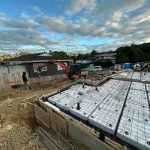
| Foundations / slab | ~15–20% | Site prepared, slab poured |
| Closed-in / roof on | ~25–30% | Framing up, roof and cladding on, weathertight |
| Fit-out / lock-up | ~25–30% | Linings, kitchen, bathrooms, joinery |
| Practical completion | ~10–15% | Finishing, handover, CCC |
When we finish a stage, we issue a payment claim. The bank sends a registered valuer to inspect and confirm the work is genuinely done and matches the plans. Only then does the bank make the drawdown and pay the money, usually straight to us. The bank pays for work that exists, not work that’s promised. That valuer sign-off protects you as much as the bank, because nobody’s releasing your money for a slab that hasn’t been poured.
The timing gap nobody warns you about
Here’s the process-insider bit. There’s often a lag between us completing a stage and the bank’s valuer getting out to inspect, then the funds clearing. A few days, sometimes over a week in a busy period. A well-run builder carries that gap so your project doesn’t stall waiting on a bank inspection. When you’re comparing builders, ask directly how they manage cash flow between drawdowns. It’s the difference between a build that keeps moving and one that stops dead every time a payment is due. Keeping the finance and the physical work in step is built into how we run each stage of a build.
“The single biggest finance mistake we see isn’t the deposit. It’s a family budgeting for the build contract and forgetting the build contract isn’t the whole cost. Site works, services, consent, fees. That gap is where a finance approval quietly comes up short, six weeks after the slab’s gone in.”
— Superior Homes Team
Where the deposit sits in all this
Your deposit usually goes in first, at contract signing, and forms part of that opening 10%. From there the bank’s drawdowns cover each subsequent stage. Picture a couple building in Millwater on an $850,000 fixed-price contract: their $85,000 deposit and KiwiSaver funds the start, and the bank draws down the remaining $765,000 across the following stages as we build. They only ever pay interest on what’s been drawn, which keeps their holding costs down through the longest months of the project.
Turnkey Purchase or Progress Payments: Two Different Finance Paths
Not every new build runs on drawdowns. If you buy a finished home from a developer on a turnkey basis, the finance works nothing like a staged construction loan.
On a turnkey deal you sign a sale and purchase agreement, pay a deposit, then pay the balance in one settlement once the home is complete and titled. No progress payments. No valuer inspection between stages, and no interest ticking over on partial drawdowns while the build runs. Your money sits still until settlement day, which is the single biggest cash-flow difference between the two routes. The trade-off is control: the specification, the finishes and the timeline belong to the developer, and variations usually aren’t on the table.
A progress-payment build on your own section is the mirror image. You carry the loan through the build and pay interest on each drawdown as it’s released, and in return you decide the design, the specification and who builds it.
The new build lending exemption reaches both routes. Per the Reserve Bank, it covers residential construction loans and a newly built home bought from a developer within six months of completion, so a turnkey buyer can still get the benefit of the lower deposit settings. Which path suits you comes down to a straight choice: control of the build, or certainty of the price and the date.
That all works cleanly when the build goes to plan. The real test of how you’ve set up your finance is what happens when it doesn’t.
What Happens to Your Loan When the Build Costs More Than the Contract
Every experienced builder will tell you the same thing: budget for the whole project, not just the build contract. The finished, move-in-ready cost of an Auckland home typically runs 20 to 30% above the build contract figure once you add everything the contract leaves out. This is the number that catches people, and getting it wrong at the finance stage is what turns a dream build into a stressful one.
The costs that live outside the build contract
A fixed-price build contract covers the house. It usually doesn’t cover site works (earthworks, retaining, driveways), services connections (water, power, wastewater), professional fees (architect, engineer, surveyor), council consent fees, or development contributions. On a sloping section in Long Bay, site works alone can run tens of thousands more than a flat site in Flat Bush. Your construction loan needs to be sized for the full project, or you’ll be scrambling for cash mid-build. Consent costs are worth pricing properly before you set the loan amount, and we’ve broken down what a building consent covers and what Auckland Council charges for one.
🏠 Building tip: Ask your lender to approve a contingency of at least 5 to 10% of the build cost on top of the contract. It’s far easier to have the headroom approved upfront than to go back to the bank for more money halfway through, when your borrowing position may have changed.
Variations: when you change your mind mid-build
A variation is any change to the agreed scope once the build’s underway, upgrading the kitchen, adding a bathroom, changing the cladding. Variations cost money, and here’s the catch: your construction loan was approved for the original contract sum. A variation that pushes the total past your approved loan limit means going back to the bank for more, and that’s not automatic. The bank reassesses. If your income or the property market has shifted, the top-up may not be there.
The practical lesson we drum into every client: lock your design down before the build starts. Every change made on site costs more than the same decision made on paper, and every change eats into your finance headroom. Keeping that under control is a core part of the way we manage payment claims and variations through a build.
Auckland build costs, so you can size the loan properly
Ballpark figures help you set the loan at the right level. Building in Auckland typically costs somewhere between $3,200 and $5,500 per square metre including GST, depending heavily on specification, site, and design complexity. Nationally, Stats NZ consent data puts the average new home at around $3,200 per square metre. For the full picture by house size and specification, see our breakdown of what it costs to build a house in New Zealand. A premium architectural home with a complex roofline and imported finishes climbs well past the top of that range.
Run the maths for a 200-square-metre home in Auckland and you’re looking at a build contract of roughly $640,000 to $1.1 million before you add that 20 to 30% for everything outside the contract. That’s the number your construction loan has to carry, not the build contract alone. Getting this right at the start is genuinely half the battle, and it’s why we walk every client through a full project budget before a contract is ever signed.
Important: Construction lending, LVR, and DTI rules are set by the Reserve Bank and applied differently by each bank, and they change over time. We build homes, we don’t arrange finance, so treat the figures here as a starting point and get your specific position confirmed by your bank or a registered mortgage adviser before you commit. Current settings are published by the Reserve Bank of New Zealand.
Get the finance structured right and a new build is one of the most achievable ways into a quality home in Auckland. Get it wrong and it’s a fortnight-by-fortnight scramble. The good news is that the structure is knowable, and a builder who’s run hundreds of these can help you set it up before you ever sign.
Building With Confidence Starts With the Right Finance Setup
A construction loan isn’t complicated once you see the shape of it. Money out in stages, interest only on what’s drawn, a lower deposit thanks to the new build exemptions, and a real need to budget for the whole project rather than just the build contract. Nail those four things and the finance side stops being the scary part. The families who build with the least stress are the ones who sorted the full-project budget before they picked up a hammer.
➡ Book a free consultation with Superior Homes
➡ See our completed Auckland projects
➡ Learn more about building a new home with Superior Homes
What is a construction loan in NZ?
A construction loan is a home loan designed to fund building a new house rather than buying an existing one. Instead of paying out the full amount on day one, the bank releases it in stages, called drawdowns, as each stage of the build is completed and inspected. You pay interest only on the money drawn so far, and the loan usually converts to a standard mortgage once the Code Compliance Certificate is issued.
How much deposit do I need for a construction loan?
Many owner-occupiers can build with around a 10% deposit, because new builds are exempt from the Reserve Bank's LVR (loan-to-value ratio) restrictions. First-home builders using the Kāinga Ora First Home Loan may build with as little as 5% through participating lenders. Banks set their own criteria on top of the Reserve Bank rules, so confirm your position with your lender or a mortgage adviser.
Are new builds exempt from LVR and DTI rules?
Yes. According to the Reserve Bank of New Zealand, new residential construction is exempt from both LVR (deposit-based) and DTI (income-based) lending restrictions. The exemption applies to all residential construction loans regardless of borrower type, and to a newly built home bought from a developer within six months of completion. This is a deliberate policy to encourage new housing supply.
How do progress payments work on a new build?
Your fixed-price build contract sets out a schedule of stages, such as foundations, closed-in, fit-out, and completion, each with a dollar amount. When the builder finishes a stage, they issue a payment claim. The bank sends a registered valuer to confirm the work is done, then releases that stage's funds, usually paid directly to the builder. The bank pays for completed work, not promised work.
Do I pay interest on the whole loan during the build?
No. You only pay interest on the portion of the loan that has been drawn down. Early in the build, when just your deposit and first drawdown are in play, interest is low. It rises as more of the loan is released stage by stage. Most construction loans are interest-only during the build and convert to principal-and-interest once the home is finished.
What happens if my build costs more than the loan?
If a variation or overrun pushes the total past your approved loan limit, you have to go back to the bank for a top-up, and it is not automatic. The bank reassesses your position, and if your income or the market has changed, the extra funds may not be available. This is why we recommend approving a contingency of 5 to 10% upfront and locking your design before the build starts.
How many drawdowns does an Auckland new build have?
Most Auckland new builds run through five or six drawdowns, from the initial deposit through foundations, closed-in, fit-out, and practical completion. The exact number and the share of the contract at each stage are set out in your build contract's progress payment schedule, which is the same document the bank uses to release each drawdown.
Was the First Home Grant abolished?
Yes. The First Home Grant was scrapped in May 2024 and is no longer available. The First Home Loan, underwritten by Kāinga Ora, is still available and lets eligible first-home buyers build with as little as a 5% deposit through participating lenders. You may also be able to withdraw your KiwiSaver towards your deposit if you meet the criteria.
How much does it cost to build a house in Auckland?
Building in Auckland typically costs between $3,200 and $5,500 per square metre including GST, depending on specification, site, and design. Nationally, Stats NZ consent data puts the average around $3,200 per square metre. Remember the full move-in cost usually runs 20 to 30% above the build contract once site works, services, professional fees, and consent costs are added.
Does a construction loan cover site works and consent fees?
A fixed-price build contract usually covers the house only, not site works, services connections, professional fees, council consent, or development contributions. Your construction loan needs to be sized for the full project, not just the build contract. On a sloping section, site works alone can add tens of thousands, so budget for the whole cost before you set your loan amount.
Is a turnkey new build the same as a construction loan?
No. On a turnkey purchase you buy a finished home from a developer: you pay a deposit, then settle the balance in one payment once the home is complete and titled, so there are no staged drawdowns and no interest during the build. A construction loan funds a build on your own section and releases money stage by stage. The Reserve Bank's new build exemption covers both a residential construction loan and a newly built home bought from a developer within six months of completion.
Free Guide: Avoid Costly Mistakes When Building or Developing
Download our free guide — everything you need to know before you build or develop in Auckland, put together by the Superior Homes team.