224c Certificate NZ: From Subdivision Consent to New Titles
Last updated:
Quick answer: A 224c certificate is the council sign-off confirming your survey plan is approved and every subdivision consent condition has been met, secured by a bond, or carried forward as a consent notice. Land Information New Zealand will not deposit your plan or issue new Records of Title without it. A separate section 223 certificate comes first, and two statutory clocks run between the two.
Getting the subdivision consent is the moment everyone celebrates. It is also the moment the slower half of the job starts, because a granted subdivision consent does not create a single new title. It gives you permission to go and earn them.
Between that consent and a set of Records of Title sit two council certificates with different tests and different issuers, one round of engineering approval, a development contributions invoice that the council can legally use to stall you, and a lodgement at Land Information New Zealand. Land Information New Zealand, usually shortened to LINZ, is the government agency that holds the country’s land records and issues titles. Nothing in that sequence happens automatically.
The two certificates are section 223 and section 224(c), named after the sections of the Resource Management Act 1991 that create them, and they are commonly treated as one step when they are not. Section 223 is about the survey plan and whether it matches the consent. Section 224(c) is about the conditions and whether you have actually satisfied them. One has a hard statutory deadline on the council. The other, at Auckland Council, has no published timeframe at all.
Underneath both sits a pair of expiry clocks that catch consented subdivisions every year: a five-year lapse period on the consent, and a three-year window after the survey plan is approved in which the plan must be deposited. Miss the second one and an approved plan becomes worthless even though nobody did anything wrong.
We take consented subdivisions through this stage regularly, and the pattern is consistent. The delays almost never come from the council refusing something. They come from a condition nobody costed, an as-built that does not match what was built, or an invoice that was not paid before the certificate was requested.
Regulatory note: This article explains how the statutory process works. It is general information, not planning, legal or surveying advice for your site. Subdivision certification is handled by a licensed cadastral surveyor, and consent conditions are interpreted by the council that granted them. Confirm your own position with Auckland Council and your surveyor. Any building work on the new lots is separate again and belongs with a Licensed Building Practitioner and a building consent.
Considering subdividing? Sonder Architecture’s free Auckland subdivision pre-check runs your site against the Unitary Plan standards it needs to be tested against.
The Two Certificates That Turn a Consent Into Titles
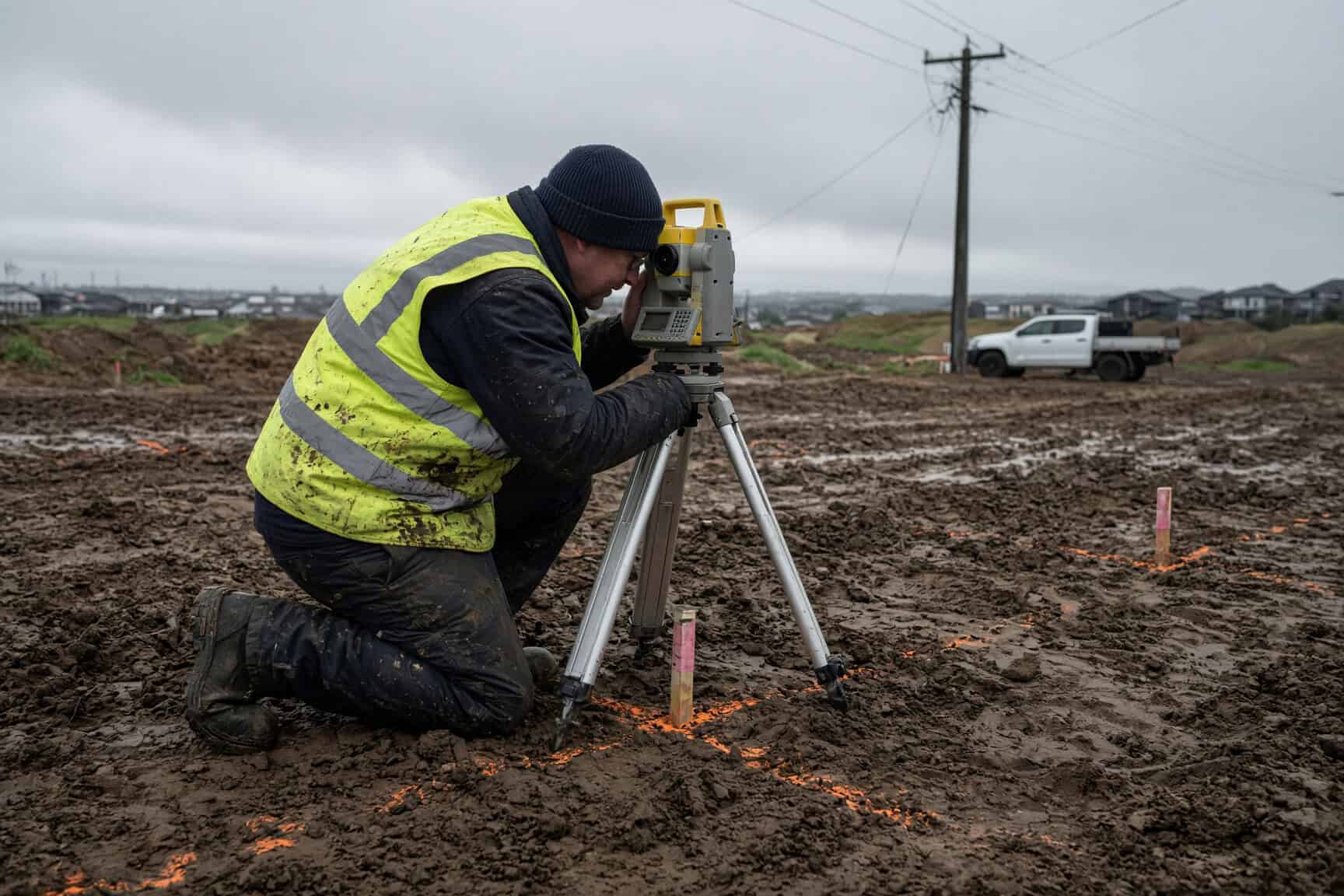
A subdivision consent is permission to change the boundaries. It is not evidence that you did. The evidence is a survey plan, prepared by a licensed cadastral surveyor. That is the specific class of surveyor licensed to define legal property boundaries, and only they can do this work. The plan shows exactly where the new boundaries sit and what each new allotment, meaning each separate piece of land the subdivision creates, contains.
That plan then has to clear two separate council acts, not one. It has to be approved, and it has to be cleared for deposit. Different tests, different sections of the Act, and in Auckland, very different processing behaviour.
Section 223: does the survey plan match the consent?
Section 223 of the Resource Management Act lets an owner submit a survey plan to the council for approval, provided a subdivision consent has been obtained and has not lapsed. The test is narrow and mechanical: the council must approve the plan if it is satisfied the survey plan conforms with the subdivision consent. It is not a second chance to reassess the merits of your subdivision. It is a conformity check.
The council has ten working days to decide. Section 223(1A) requires that within 10 working days after receiving a survey plan, the territorial authority (the council, in the Act’s own language) must either approve it or decline it. That is one of the tightest statutory clocks anywhere in the subdivision process, and it is rarely quoted in the material homeowners and first-time developers read.
If the plan is approved, an authorised officer of the council certifies the approval. That certification is conclusive evidence that every road, private road, reserve, land vested in the council in place of reserves, and private way shown on the plan has been authorised and accepted by the council. In practical terms, section 223 approval is what locks the geometry. Nothing about the boundaries is negotiable after it.
Section 224(c): have the conditions actually been met?
Section 224 is the gate on deposit. No survey plan can be deposited unless a certificate signed by an authorised council officer is lodged with the Registrar-General of Land, the LINZ official who controls the land register, stating that the plan was approved under section 223 and that the consent conditions have been complied with to the council’s satisfaction. That certificate is the section 224(c) certificate, and the letter is simply the paragraph of the Act it comes from.
Auckland Council’s own description is blunt about what it proves and when to ask for it. The council states that an s224c certificate confirms a survey plan has been approved under s223 and that all subdivision conditions have been met, and that you should apply towards the end of the process once the survey plan is approved and all physical works have been completed. It also states plainly that you need an s224c certificate to request a Record of Title from LINZ.
What most people miss is that section 224(c) does not require every condition to be finished. The Act allows three mechanisms to carry an unfinished condition across the line, and choosing the right one is often what decides whether you get titles this quarter or next.
| Mechanism | RMA section | What it does |
|---|---|---|
| Completion certificate | s222 | Council certifies you have entered a bond binding you to finish the work or make the financial contribution within a period the council specifies |
| Consent notice | s221 | Records a condition that must be complied with on a continuing basis by you and every owner after you |
| Bond | s108(2)(b) | Security provided under a condition of the consent itself, on terms the consent describes |
The consent notice is the one that outlives you. Section 221 deems a consent notice to be an instrument creating an interest in the land, registrable against the title, and a covenant running with the land that binds all subsequent owners. That is why an ordinary-looking condition about, say, maintaining a shared stormwater device turns up on a buyer’s title search a decade later and becomes a negotiation point in a sale you had nothing to do with.
Consent notices can be varied or cancelled, but only after the plan is deposited and only through a formal application or council review. The Act applies the standard consent-processing provisions to that application, so it is a resource consent process in miniature rather than a phone call. Worth knowing before you accept a condition as a consent notice for convenience.
This is the stage where the gap between a subdivision priced on paper and a subdivision delivered on the ground shows up. If you want to see how we take a consented subdivision through to titles, that is the part of the job we run in-house alongside the surveyor and the engineer.
🏠 Development tip: Before you accept a bond as the fastest way past an unfinished condition, price the alternative. A bond ties up capital and still leaves the work to do. A consent notice costs nothing today and can quietly reduce what a buyer will pay for the lot later. Decide which one on the numbers, not on which gets you to titles this month.
Expiry Dates: How a Consented Subdivision Quietly Dies
A subdivision consent is not permanent, and the way it expires is genuinely counter-intuitive. There are two separate expiry mechanisms, they run in sequence, and the second one is almost never discussed outside surveying and planning circles.
The five-year lapse, and the act that stops it
Section 125 of the Resource Management Act sets the default. A resource consent lapses on the date specified in the consent, or if no date is specified, five years after the date the consent commenced. Many Auckland subdivision consents specify their own lapse date, so the first thing to do with any consent you hold or buy is read the decision and find out which applies.
The consent does not lapse if, before it lapses, it is given effect to. For a subdivision consent, section 125(2) defines that precisely: the consent is given effect to when a survey plan for the subdivision has been submitted to the council under section 223. Submitted, not approved. Lodging the plan is the act that stops the five-year clock.
Then comes the sentence that catches people. Section 125(2) continues that the consent shall thereafter lapse if the survey plan is not deposited in accordance with section 224. Stopping the first clock does not mean you are safe. It means you have moved onto the second one.
The three-year deposit window nobody mentions
Section 224(h) is a single line at the end of a long section, and it is the quiet killer. No survey plan can be deposited unless less than three years has elapsed since the council approved the plan under section 223. An approved plan has a shelf life.
Three years sounds generous until you put a real project against it. Engineering approval, physical works over a wet Auckland winter, a services connection that needs a road opening, an as-built round that comes back for correction, a development contributions invoice, and a market that softened enough to make you slow down. Stack those and a three-year window closes faster than it reads on paper.
An extension of the lapse period is possible, but the timing is unforgiving. Section 125(1A)(b) only allows an extension application made before the consent lapses, and the council must take into account whether substantial progress or effort has been and continues to be made towards giving effect to the consent. There is no retrospective fix. A lapsed consent is a new application.
🏠 Development tip: Diary both dates the day your consent is granted, not the day works start. Put the section 125 lapse date and, once section 223 approval comes through, the three-year section 224(h) date in the same place you keep your finance expiry. Those three dates are the ones that turn a paused project into a dead one.
Rules can move underneath a long-running consent
Auckland’s planning framework is mid-change, which matters if your consent has years left to run. Auckland Council withdrew Plan Change 78 in part at 5pm on 9 October 2025, and the parts that remain operative are the City Centre provisions, operative in part from 6 June 2025, and the Business-Metropolitan Centre Zone, operative from 8 May 2026. Plan Change 78 was the plan change that would have brought the Medium Density Residential Standards, a national set of density rules, into the Auckland Unitary Plan, the planning document that sets zoning and development rules across the region, for residential zones.
Its replacement, Plan Change 120, was notified on 3 November 2025 and is not operative. Auckland Council records that the first submission period closed at 5pm on 19 December 2025, a Summary of Decisions Requested report was published on 14 May 2026, and a second public submission period is open from 27 August until 5pm on 24 September 2026. Critically for anyone holding a consent, the council states that under section 86B(3) of the Resource Management Act some of the proposed plan change rules have immediate legal effect.
An existing subdivision consent is assessed against the rules that applied when it was granted, so a plan change does not retrospectively invalidate it. What a plan change can do is change what you would get if you had to re-apply. That is the real cost of letting a consent lapse in a shifting planning environment, and it is a much bigger number than the application fee. If you are still deciding whether a site stacks up at all, Sonder Architecture covers the feasibility and zoning side of subdividing in Auckland in detail, and we pick the job up from consent onwards.
➡ Talk to us about a consented subdivision you need taken through to titles
Engineering Approval, Physical Works and As-Builts: Where the Calendar Actually Goes
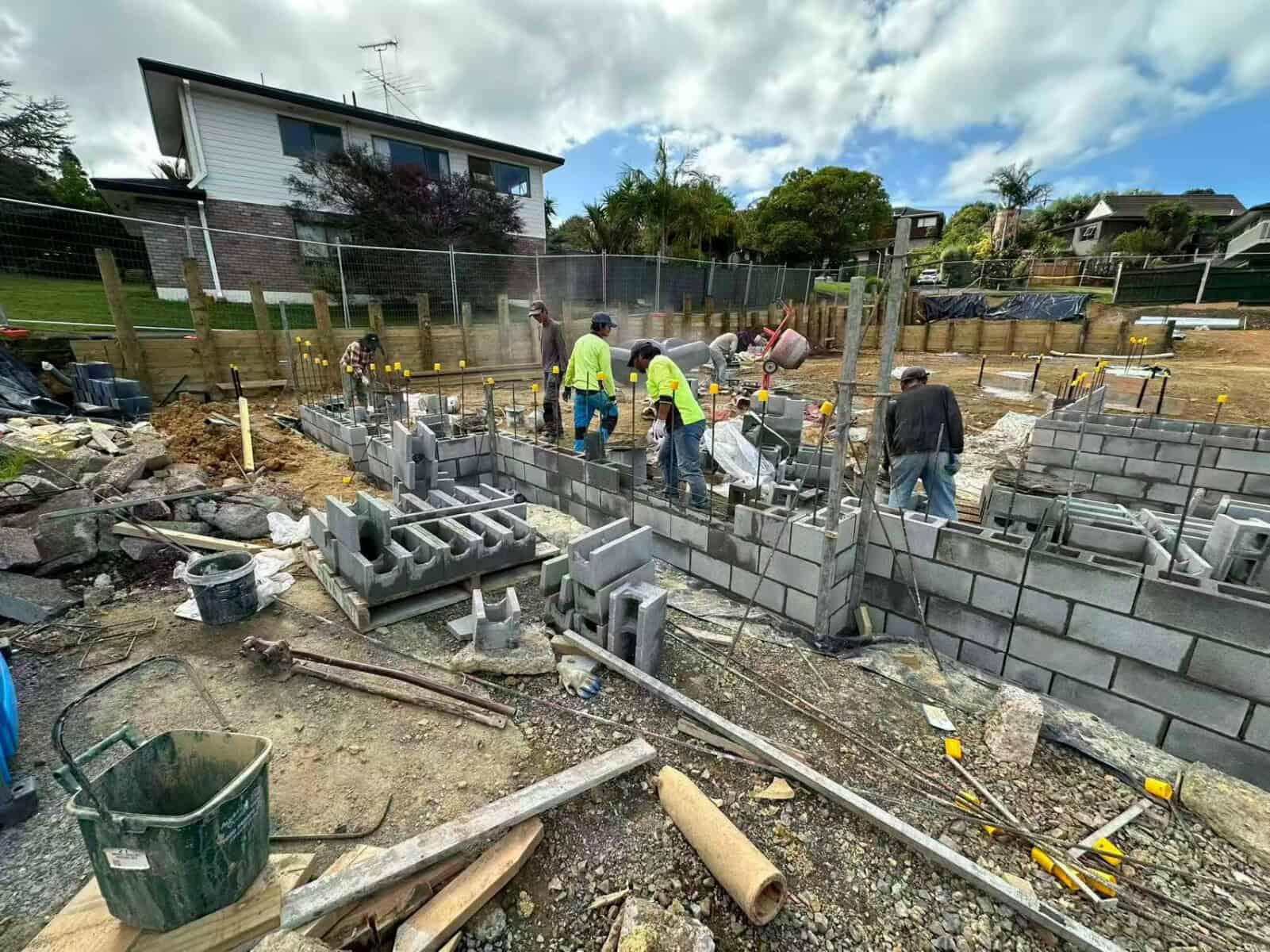
Almost every month of elapsed time between consent and titles is spent on physical works and the paperwork that proves they were built correctly. The certificates themselves are fast. The infrastructure is not.
Engineering approval comes before the diggers
Any subdivision that creates or extends public infrastructure needs engineering approval before construction. Auckland Council states that if you provide all the required documentation it can approve the Engineering Approval Certificate for public drainage, watermain and road works within 20 working days. That conditional clause is doing real work. An incomplete submission does not start a slow clock, it starts no clock.
The council also sets who may do the design: a New Zealand Chartered Professional Engineer or a registered professional surveyor with experience in land development and infrastructure is required to design and supervise the work. This is not a scope you can hand to a general contractor and manage yourself. Council development engineers manage the asset acceptance process for stormwater, roading and park assets within the engineering plan approval, and coordinate with Watercare engineers for final issue of the Engineering Approval Completion Certificate.
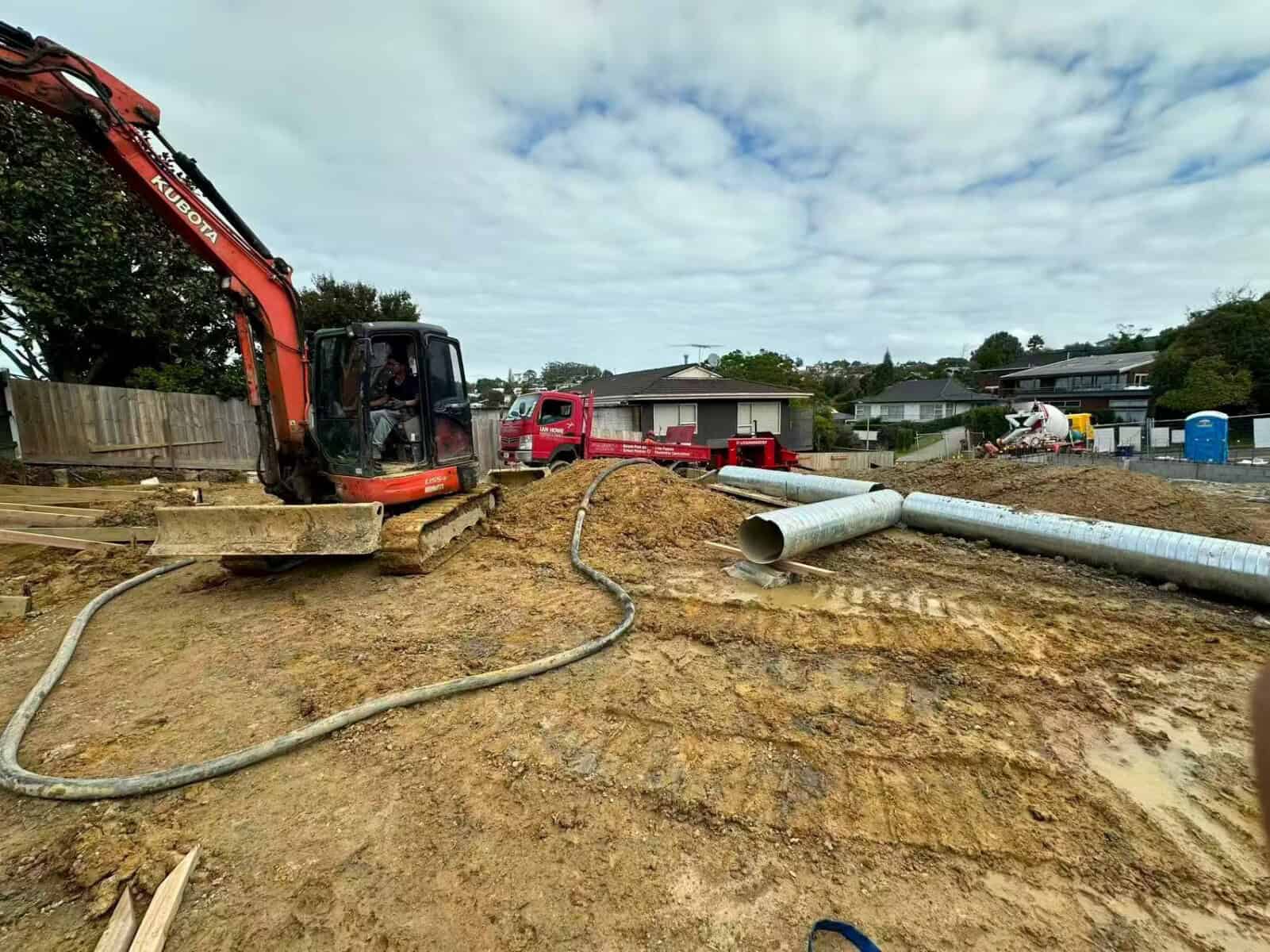
Auckland Council’s own step list after consent is short and worth reading literally. Submit a detailed survey plan for a section 223 certificate, then once the survey plan is approved you can begin works and must comply with conditions such as installing services covering water, wastewater, power and phone, plus entrances and driveways. Once all physical works required by the consent are complete, you apply for the section 224(c) certificate providing evidence of how each condition was met.
Services, crossings and the connections that set the critical path
Water and wastewater connections through Watercare, power connections, and the vehicle crossing are the three items that most often decide the finish date. Each has its own application, its own approval body and its own queue. None of them speeds up because you need it to. Sonder Architecture has covered the vehicle crossing approval process in Auckland and the Watercare connection cost side in more depth than we will repeat here.
The sequencing lesson is simple and expensive to learn late: lodge the connection applications while the engineering approval is still being processed, not after the works are built. We plan those lodgements at the same time we plan the earthworks, which is the difference between a services queue running in parallel with construction and a services queue running after it.
As-builts are a paperwork gate, not a formality
Assets that will vest in the council, meaning infrastructure such as roads and public drainage that transfers into council ownership once accepted, have to be documented as they were actually built, not as they were designed, and the as-built package is what the council reviews before accepting ownership. Any variation between the approved engineering plans and the constructed asset has to be reconciled. That reconciliation is a common source of a several-week loop at the very end of a project, exactly when everyone assumed they were finished.
The practical defence is to have the surveyor pick up as-built information progressively rather than in one sweep at the end. Buried services are the obvious case. Once a trench is backfilled, verifying what is in it is a far more expensive exercise than measuring it the week it went in.
🏠 Development tip: Ask your engineer for the as-built requirements at engineering approval stage, not at completion. The format, the data fields and the asset schedules are all specified up front, and a contractor who knows what has to be recorded will record it as they go. That single conversation removes the most common four-week loop at the end of a subdivision.
On our own projects we programme a straightforward Auckland subdivision at six to twelve months from first feasibility numbers through to new titles, and the spread inside that range is almost entirely about services and earthworks rather than council processing. If you want to see where each council sign-off sits in a development programme, that sequencing is how we run it.
“The projects that stall after consent are rarely the complicated ones. They are the ones where nobody owned the certification programme, so the survey plan, the engineering approval, the connection applications and the contributions invoice each waited for somebody else to move first.”
What Has to Be Paid Before Anyone Signs, and What Happens at LINZ
The council has a statutory lever it can pull if your development contributions are unpaid, and it points directly at the certificate you are waiting for. This is the single most under-explained financial risk in the back half of a subdivision.
Development contributions and the withholding power
Development contributions are the charges a council levies to fund the network infrastructure a new lot will use. Section 198 of the Local Government Act 2002 gives a territorial authority the power to require a development contribution when a resource consent is granted for a development in its district. Auckland Council levies them under the Auckland Council Development Contributions Policy 2025, which is the policy document to read for your own numbers.
Section 208(1)(a)(i) of the same Act is the enforcement mechanism, and it is unambiguous: until a required development contribution has been paid, the council may withhold a certificate under section 224(c) of the Resource Management Act 1991. It may also prevent the commencement of a resource consent. Under section 208(1)(d) it may register the contribution as a charge on the title of the land, which is a problem that follows the property rather than you.
There is a timing rule in your favour that is worth knowing. Section 198(2A) requires that a development contribution be consistent with the policy that was in force at the time the application was submitted, accompanied by all required information. That anchors the applicable policy to your lodgement, which is one more reason a complete first lodgement is worth more than a fast one.
Auckland Council has published that from 1 July 2026 development contributions assessed under the Development Contributions Policy 2025 increase by 2 per cent each year, and that the increase applies to invoices issued on or after that date. How that annual uplift and the lodgement rule interact on a specific consent is a question for the council’s development contributions team. The policy itself sets out payment timing and enforcement. Read it before you rely on a number from a feasibility spreadsheet.
On the cost side, we budget a straightforward Auckland subdivision at $140,000 to $190,000 or more per new lot, all in, covering survey, consent, engineering design, physical works, contributions and professional fees. Those figures are quoted excluding goods and services tax, because a subdivision undertaken as a taxable activity generally allows GST to be reclaimed, and your accountant should confirm your own GST position before you build the number into a feasibility. If the funding side of that is still open, we have written separately on how development finance works in Auckland.
Selling lots before the titles exist
Developers routinely sell new lots before titles issue, and the Resource Management Act builds specific protections into those agreements whether or not the contract mentions them. Section 225 deems an agreement to sell an allotment in a proposed subdivision, made before the survey plan is approved under section 223, to be subject to two conditions.
The first is that the purchaser may cancel the agreement by written notice at any time before the end of 14 days after the date the agreement was made. The second matters far more to a slow project. A purchaser may rescind by written notice at any time after the later of two years from the date the resource consent was granted, or one year from the date of the agreement. The trigger is a vendor who has not made reasonable progress towards submitting a survey plan for approval, or who has not deposited the plan within a reasonable time after approval.
That converts the section 223 and section 224(h) clocks from a planning problem into a sales problem. A stalled certification programme does not just delay your settlements. It can hand every pre-sale purchaser a statutory exit at exactly the point in the market cycle when you would least like them to take it. Anyone selling off the plan should have their lawyer walk them through section 225 before the contracts go out.
Deposit, and the titles themselves
Once the certificates are in hand and the fees are paid, the surveyor lodges the plan and certificates with LINZ, which deposits the plan, cancels the existing title, and issues a new Record of Title for each new allotment. Auckland Council describes the final step the same way: lodge the subdivision plan and certificate with LINZ, who will issue the new Records of Title.
The Registrar-General of Land is not a rubber stamp at this point. Section 226 of the Resource Management Act prevents the Registrar-General from issuing a Record of Title for a separate allotment shown on a survey plan unless satisfied, after due inquiry, that the plan has been deposited in accordance with section 224. LINZ guidance for practitioners is explicit that errors and omissions in the deposit documentation cause delays in the issue of new Records of Title.
Auckland Council does not publish a processing timeframe for the section 224(c) certificate, and says so directly: due to the processes involved in issuing the section 224c certificate, it cannot give an estimated timeframe. That is an unusually honest statement from a consenting authority. Treat it as a warning. The last stage of a subdivision should never be the stage carrying no float.
Before you rely on any of this: lapse dates, conditions and contributions are specific to your consent. Read the decision document, then confirm the position with the council that granted it and with your licensed cadastral surveyor. Where a condition affects what can be built on the new lots, that becomes a building consent and Licensed Building Practitioner question, not a subdivision one. Development contributions figures should be confirmed with Auckland Council, and tax or GST treatment with a chartered accountant.

Getting From a Consent to a Title Without Losing a Year
The back half of a subdivision is a certification programme, and it fails in the same three ways every time. A condition that was priced as a formality turns out to need a bond or a consent notice. An as-built comes back for correction after the trench is closed. An invoice sits unpaid while everyone waits on a certificate the council is legally entitled to withhold until it is settled.
The dates that matter are not the ones in your build programme. They are the lapse date on the consent, the three-year window after section 223 approval, and, if you are pre-selling, the rescission date section 225 hands your purchasers. None of those move because a project got busy.
If you hold a consented subdivision that has stopped moving, the diagnosis is usually a single unowned workstream rather than a genuine obstacle. Work out which of the survey plan, the engineering approval, the connection applications or the contributions invoice is waiting on somebody. The rest usually follows. That is the work we do alongside the development work we take on across Auckland, and it is a very different job from winning the consent in the first place.
➡ Book a free consultation with Superior Homes
➡ See what subdividing land in Auckland actually costs
➡ Read how an Auckland townhouse development runs end to end
What is a 224c certificate in New Zealand?
It is the certificate a council issues under section 224(c) of the Resource Management Act 1991 confirming that a survey plan has been approved under section 223 and that the subdivision consent conditions have been complied with to the council's satisfaction. Auckland Council states you need an s224c certificate to request a Record of Title from Land Information New Zealand. Where a condition is not yet complied with, the Act allows a completion certificate, a consent notice or a bond to cover it.
What is the difference between a section 223 and a section 224c certificate?
Section 223 is about the survey plan and section 224(c) is about the conditions. Under section 223 the council checks that the survey plan conforms with the subdivision consent and must approve or decline it within 10 working days. Section 224(c) is the certificate lodged with the Registrar-General of Land confirming conditions have been met or secured, and it is what allows the plan to be deposited. Section 223 comes first and physical works generally follow it.
How long does Auckland Council take to issue a 224c certificate?
Auckland Council does not publish a timeframe. Its guidance states that due to the processes involved in issuing the section 224c certificate it cannot give an estimated timeframe. The council's ten working day statutory deadline applies to the section 223 survey plan decision, not to section 224(c). Because there is no published clock at this stage, it is the wrong point in a programme to leave without float.
How long does a subdivision consent last before it lapses?
A resource consent lapses on the date specified in the consent, or if no date is specified, five years after the date the consent commenced, under section 125 of the Resource Management Act 1991. Many subdivision consents specify their own date, so read the decision document. The consent does not lapse if it is given effect to first, and for a subdivision that means submitting a survey plan to the council under section 223.
Does submitting the survey plan stop my consent from lapsing?
It stops the first clock but starts a second one. Section 125(2) says a subdivision consent is given effect to when a survey plan has been submitted to the council under section 223, but it shall thereafter lapse if the survey plan is not deposited in accordance with section 224. Separately, section 224(h) prevents a plan being deposited unless less than three years has elapsed since the council approved it under section 223.
Can Auckland Council refuse to issue my 224c certificate if I owe development contributions?
It can withhold it. Section 208(1)(a)(i) of the Local Government Act 2002 provides that until a required development contribution has been paid, a territorial authority may withhold a certificate under section 224(c) of the Resource Management Act 1991. The council may also prevent commencement of a resource consent and register the contribution as a charge on the title of the land. Auckland Council assesses contributions under the Auckland Council Development Contributions Policy 2025.
What is a consent notice and why does it matter?
A consent notice is issued under section 221 of the Resource Management Act where a subdivision consent condition must be complied with on a continuing basis by the subdividing owner and subsequent owners after the plan is deposited. The Act deems it an instrument creating an interest in the land, registrable against the title, and a covenant running with the land binding all subsequent owners. Varying or cancelling one requires a formal application or council review after deposit.
How long does engineering approval take in Auckland?
Auckland Council states that if you provide all the required documentation it can approve the Engineering Approval Certificate for public drainage, watermain and road works within 20 working days. The design and supervision must be carried out by a New Zealand Chartered Professional Engineer or a registered professional surveyor with experience in land development and infrastructure. Council development engineers coordinate with Watercare for the final Engineering Approval Completion Certificate.
Can I sell subdivision lots before the titles are issued?
Yes, and section 225 of the Resource Management Act builds protections into those agreements automatically. A purchaser may cancel by written notice at any time before the end of 14 days after the agreement was made. A purchaser may also rescind after the later of two years from the date the resource consent was granted or one year from the date of the agreement, if the vendor has not made reasonable progress towards submitting a survey plan or depositing it within a reasonable time. Take legal advice before contracting.
Who issues the new titles after a subdivision?
Land Information New Zealand. Once the certificates are issued and fees paid, the plan and certificates are lodged with LINZ, which deposits the plan, cancels the existing title and issues a new Record of Title for each new allotment. Section 226 of the Resource Management Act prevents the Registrar-General of Land from issuing a title for a separate allotment unless satisfied, after due inquiry, that the plan has been deposited in accordance with section 224.
Free Guide: Avoid Costly Mistakes When Building or Developing
Download our free guide — everything you need to know before you build or develop in Auckland, put together by the Superior Homes team.
References
- Resource Management Act 1991, section 223 — Approval of survey plan by territorial authority
- Resource Management Act 1991, section 224 — Restrictions upon deposit of survey plan
- Resource Management Act 1991, section 125 — Lapsing of consents
- Resource Management Act 1991, section 221 — Territorial authority to issue a consent notice
- Resource Management Act 1991, section 222 — Completion certificates
- Resource Management Act 1991, section 225 — Agreement to sell land or building before deposit of plan
- Resource Management Act 1991, section 226 — Restrictions upon issue of certificates of title for subdivision
- Resource Management Act 1991, section 108 — Conditions of resource consents (including bonds)
- Local Government Act 2002, section 198 — Power to require contributions for developments
- Local Government Act 2002, section 208 — Powers of territorial authority if development contributions not paid or made
- Auckland Council — Apply for section 224c certificate (subdivision)
- Auckland Council — Apply for a subdivision resource consent
- Auckland Council — Guidelines for engineering approval applications
- Auckland Council — Development contributions
- Auckland Council — Plan Change 78: Intensification
- Auckland Council — Plan Change 120: Housing Intensification and Resilience
- Toitū Te Whenua Land Information New Zealand — Deposit of survey plans for the subdivision of land (LINZG20777)